A gold IRA passes to the people named on your beneficiary designation form with the custodian, not by your will. You can name primary and contingent beneficiaries and split percentages. A spouse has the most flexible options; most other heirs must empty an inherited IRA within 10 years.
Heirs can keep the metal in an inherited gold IRA, sell it inside the account or take it out in kind, subject to those rules.
Naming Beneficiaries
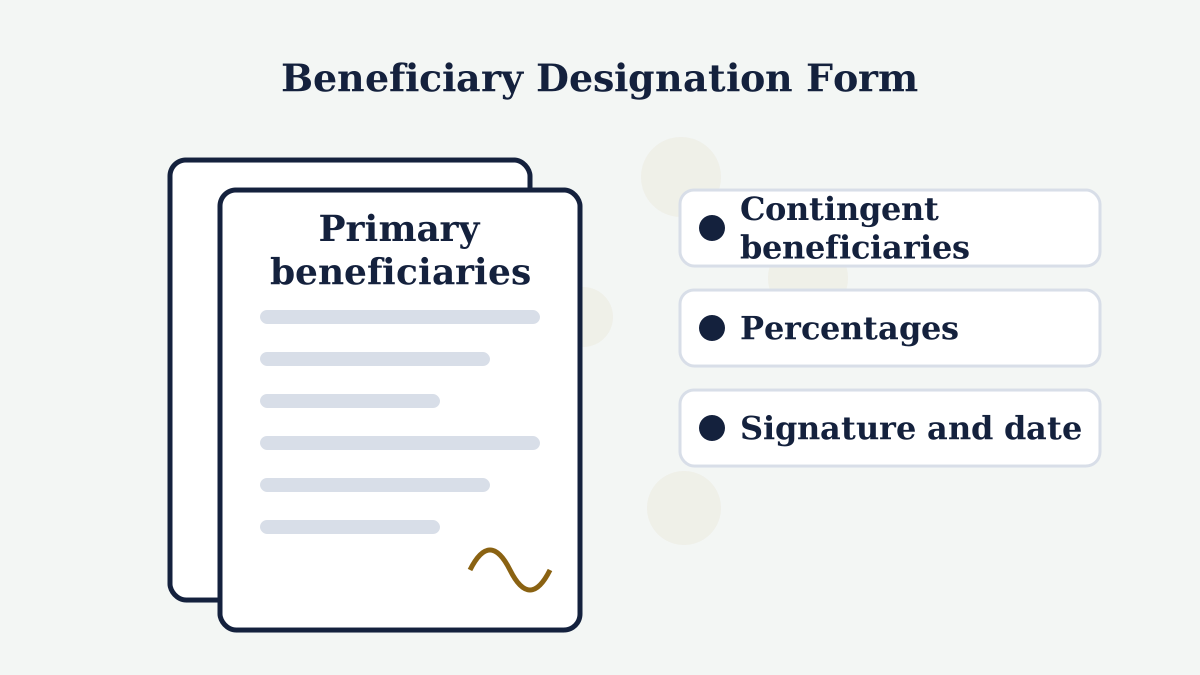
- Primary beneficiaries inherit first.
- Contingent beneficiaries inherit if no primary beneficiary survives.
- Percentages let you split the IRA among several people.
- Per stirpes designations, if your custodian offers them, pass a share to a beneficiary's children if that beneficiary dies first.
Review the form after marriage, divorce, a birth or a death. An outdated form can send your IRA to the wrong person.
What Spouses Can Do
A surviving spouse can treat the inherited IRA as their own, following their own RMD schedule, or keep it as an inherited IRA. Keeping it inherited can allow access before 59½ without the 10% penalty. Treating it as their own can delay RMDs if the spouse is younger.
What Other Heirs Can Do
| Beneficiary | Typical Rule |
|---|---|
| Adult child or other individual | Empty by end of year 10 after death |
| Minor child of the owner | Life expectancy until 21, then 10 years |
| Disabled or chronically ill | Life expectancy payments |
| Not more than 10 years younger | Life expectancy payments |
| Estate or some trusts | Often shorter schedules |
If the owner had already started RMDs, heirs under the 10-year rule generally must also take annual distributions. See our inherited IRA guide.
What Heirs Can Do With the Metal
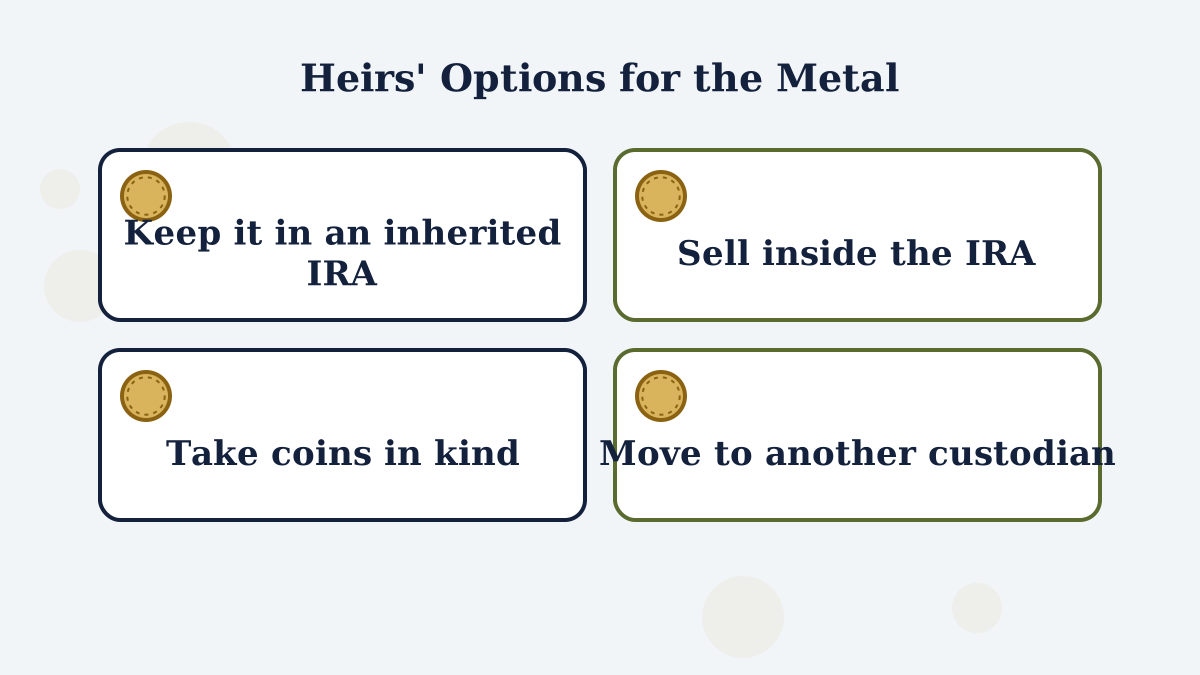
Heirs can keep the metal in an inherited IRA, sell some or all of it inside the account and withdraw cash, or take coins and bars in kind. From a traditional inherited IRA, any withdrawal or in-kind distribution is taxable income. Moves between custodians must be direct transfers.
Planning Tips
- Name contingents so the IRA doesn't fall to your estate.
- Tell your heirs which custodian and gold company hold the account.
- Keep records of products and storage location.
- Consider a Roth conversion if your heirs are likely to be in higher tax brackets.
- Hold some smaller coins so heirs can withdraw in manageable amounts.
Roth Gold IRAs for Heirs
Inherited Roth IRAs follow the 10-year rule too, but heirs generally don't need annual withdrawals, and qualified withdrawals are tax-free. That can make a Roth gold IRA a cleaner inheritance. See our Roth gold IRA guide.
Trusts as Beneficiaries
A trust can be named, which may help with control or protecting heirs. But the trust's terms affect which distribution rules apply, and mistakes can shorten payout periods. Work with an estate attorney who knows retirement accounts.
Common Beneficiary Mistakes
- Naming no one, leaving the IRA to your estate.
- Forgetting an ex-spouse is still listed after a divorce.
- Naming a minor directly without a guardian or trust plan.
- Assuming your will overrides the form, which it generally doesn't.
- Not telling anyone where the account is or who the custodian is.
Gold IRA Beneficiaries FAQs
How do I name a beneficiary for my gold IRA?
On a beneficiary designation form with your custodian. You can name primary and contingent beneficiaries and split percentages.
Does my will control who gets my gold IRA?
No. The beneficiary form on file with the custodian generally controls, regardless of your will.
What happens if I don't name a beneficiary?
The IRA usually goes to your estate under the custodian's default rules, which can mean probate and faster required payouts.
Can heirs keep the gold in an IRA?
Yes, in an inherited IRA, for as long as the distribution rules allow. Most non-spouse heirs must empty it within 10 years.
Can a trust be a gold IRA beneficiary?
Yes, but trust rules are complex. Work with an estate attorney to make sure the trust is drafted for retirement accounts.
The Bottom Line
Your gold IRA passes by its beneficiary form. Name primary and contingent beneficiaries, keep the form current and make sure heirs know where the account is. Spouses have flexible options; most others must empty the account within 10 years.