Gold IRAs themselves are legal and legitimate. The danger comes from some sellers who overcharge for the metal, push collector coins with huge markups, use fear and urgency, or encourage rule-breaking like keeping IRA gold at home. U.S. regulators say they've brought cases over the past decade alleging more than $500 million in overpriced metals sold to victims.
The good news: the warning signs are well known. If you know what to look for, you can avoid nearly all of them.
The Biggest Red Flags
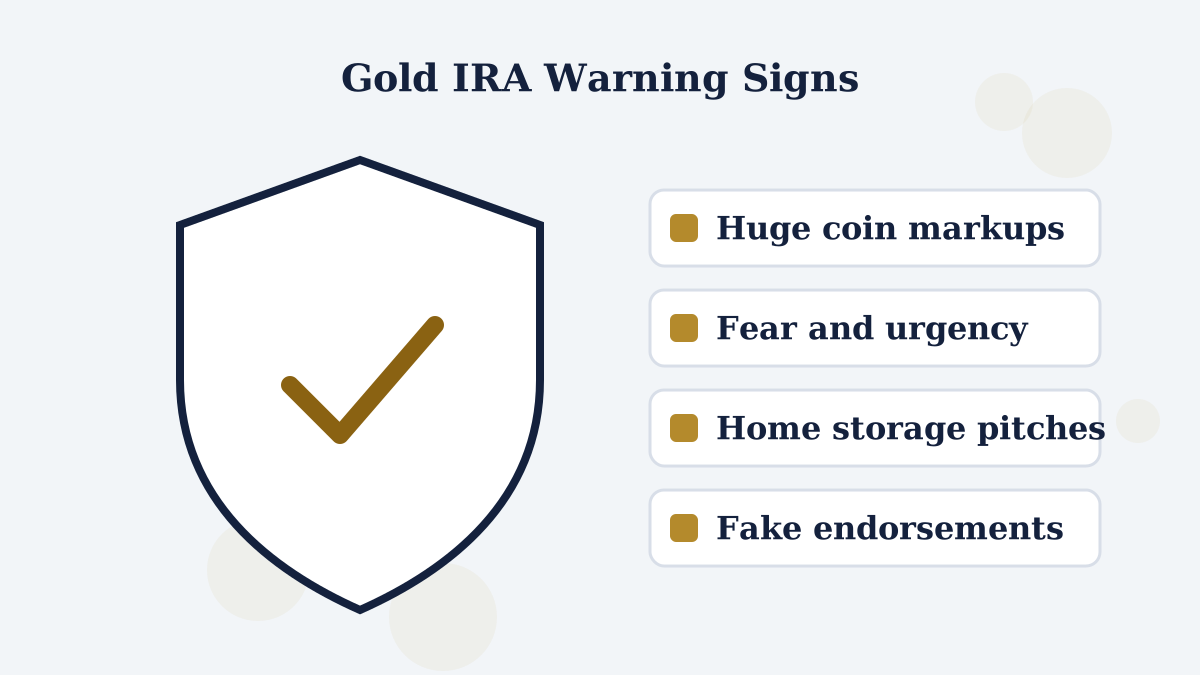
Pushing Collector or "Exclusive" Coins
The single most common problem in enforcement cases. These coins can cost far more than their gold value.
Fear and False Urgency
Predictions of market crashes, bank failures or confiscation, paired with "act today" deadlines.
Home Storage Pitches
Claims that you can keep IRA gold at home with no tax consequences.
Vague or Missing Fees
Refusing to give the markup on each product, or fees that appear only after funding.
Unsolicited Calls
A dealer contacting you first with an urgent offer.
Fake or Paid Endorsements
Celebrity or pundit endorsements standing in for clear terms.
Real Cases Regulators Have Brought
| Case | What Regulators Alleged |
|---|---|
| Safeguard Metals | A scheme of about $68 million targeting elderly and retirement-age customers, with markups of roughly 51% to 71%, settled with the CFTC and 30 state regulators in 2023 |
| Metals.com and Barrick Capital | About $185 million solicited from more than 1,600 mostly elderly investors using fear-based tactics, charged by the CFTC and state regulators in 2020 |
| Lear Capital | State regulators alleged misleading marketing and fee disclosures; a 2023 bankruptcy plan set aside $5.5 million for certain customers, and Lear agreed to change sales practices |
These cases share a pattern: retirement savers moved into overpriced coins through high-pressure sales. Our Lear Capital review covers that case in more detail.
Why Markups Are the Real Risk
Most gold IRA losses come from overpaying at the start. If you pay 60% over the metal's value, gold would have to rise about 60% just for you to break even on resale. Common bullion coins and bars typically sell for a far smaller premium.
Collector and "semi-numismatic" coins are where markups balloon. Many aren't even IRA-eligible. Our numismatic vs. bullion guide explains the difference, and our premiums over spot guide shows what's typical.
Common Lies to Watch For
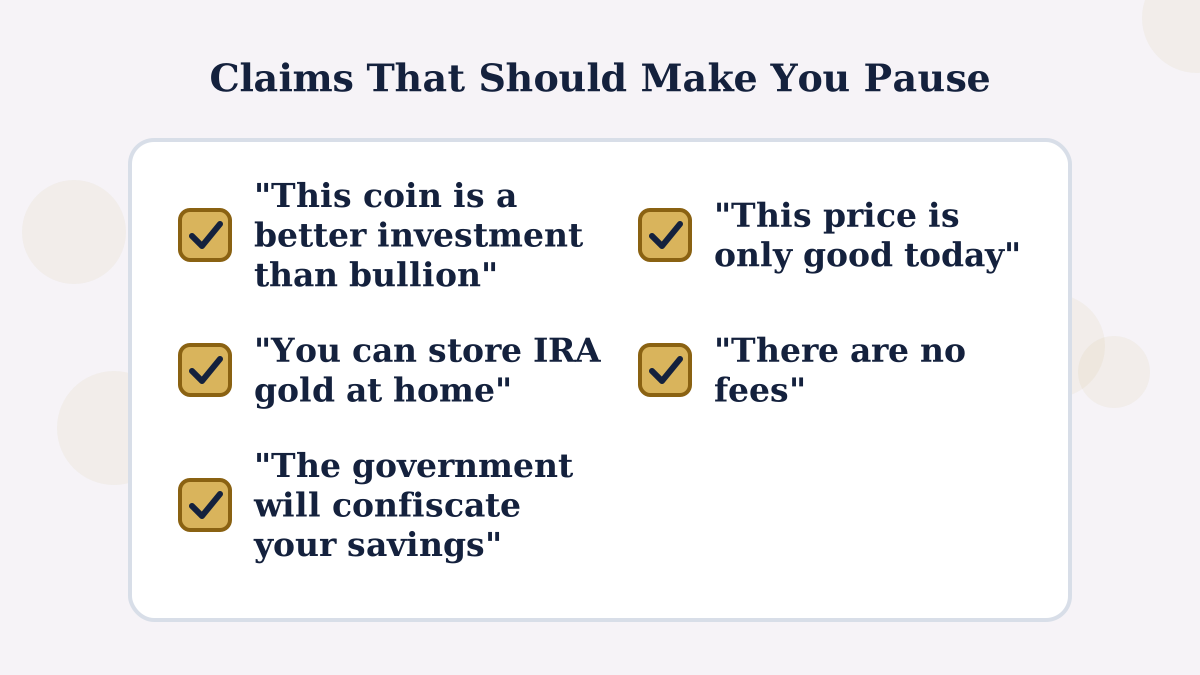
Federal regulators have published a list of lies commonly told by scam dealers. Claims to be wary of include:
- That collectible coins are safer or more profitable than bullion.
- That IRA gold can be kept at home or in a personal safe-deposit box.
- That your bank or brokerage savings are about to be seized.
- That a price or offer expires today.
- That there are no fees or markups.
Also remember that precious metals dealers are often not registered to give investment advice, even if they call themselves "IRA experts."
A Protection Checklist
- Decide Your Amount First
Choose your gold share before talking to anyone, so a salesperson doesn't set it.
- Ask for the Price Over Spot on Every Product
In writing, along with the buyback price today.
- Stick to Common Bullion
American Eagles, Maple Leafs, Buffalos and accredited bars.
- Confirm the Custodian and Depository
Your statements should come from an independent custodian, and you should know where the metal is stored.
- Check the Company's Record
Search your state regulator, attorney general and the BBB for complaints and actions.
- Take Your Time
A legitimate company won't rush you.
If You Think You Were Overcharged
Collect your confirmations, invoices and custodian statements. Contact the company and your custodian in writing. You can file complaints with the CFTC, your state securities regulator and your state attorney general, and a lawyer can advise on recovery options. Acting quickly matters, especially if a cancellation window applies.
Where Noble Gold Fits
Noble Gold publishes its IRA fees on its website, and in our research we found no regulatory actions against it. That doesn't remove the need to compare prices, but it makes costs easier to check. Our is Noble Gold legit page covers what we found.
Scams That Target Retirement Rollovers
Regulators note that scam dealers often focus on retirement rollovers because 401(k)s and IRAs hold most people's savings. A typical pattern is a fear-based ad, a call from a "specialist," and a push to roll over most or all of a retirement account into high-markup coins.
A legitimate rollover should feel unhurried. You choose the amount, the custodian is named up front, and the products are standard bullion with prices you can check against spot.
Questions Regulators Suggest Asking
U.S. regulators have published a list of questions to ask before buying physical metals. In plain terms, they come down to:
- Is the seller registered, and does it have a disciplinary history?
- What exactly am I buying, and what is its melt value?
- What's the total markup, commission and fee?
- Where will the metal be stored, and who holds title?
- How would I sell it, and at what price?
- Am I being pressured to act quickly?
Gold IRA Scams FAQs
Are gold IRAs a scam?
No. Gold IRAs are legal, IRS-recognized accounts. The problems come from some dealers who overcharge, push collector coins, use fear-based pitches or encourage rule-breaking like home storage.
What is the biggest gold IRA red flag?
Being steered toward "exclusive," "collectible" or "semi-numismatic" coins at prices far above their gold value. Regulators have cited markups well over 50% in enforcement cases.
How do I check a gold IRA company?
Look up complaints with your state attorney general and the Better Business Bureau, search for enforcement actions by the CFTC and state regulators, and ask for every fee and markup in writing.
What should I do if I think I was scammed?
Gather your purchase confirmations and statements, contact the company and your custodian in writing, and file complaints with the CFTC, your state securities regulator and attorney general. A lawyer can advise on recovery options.
Is a home storage gold IRA a scam?
Not always a deliberate scam, but it carries serious tax risk. In a 2021 Tax Court case, IRA gold kept at home was treated as a taxable distribution.
The Bottom Line
Gold IRA scams usually look like normal sales with abnormal prices. Stick to common bullion, get every fee and markup in writing, use an independent custodian and depository, and never let a deadline make the decision for you.