A gold IRA can make sense for retirees as a modest diversifier, but retirement changes the math. You may need income, you'll face required minimum distributions from 73 in a traditional IRA, and you have less time to recover from a bad decision. Gold pays no income, so it shouldn't crowd out the assets you live on.
Retirees are also a prime target for high-pressure gold sales. The safest approach is to decide your share first, then choose a transparent company.
What Changes in Retirement
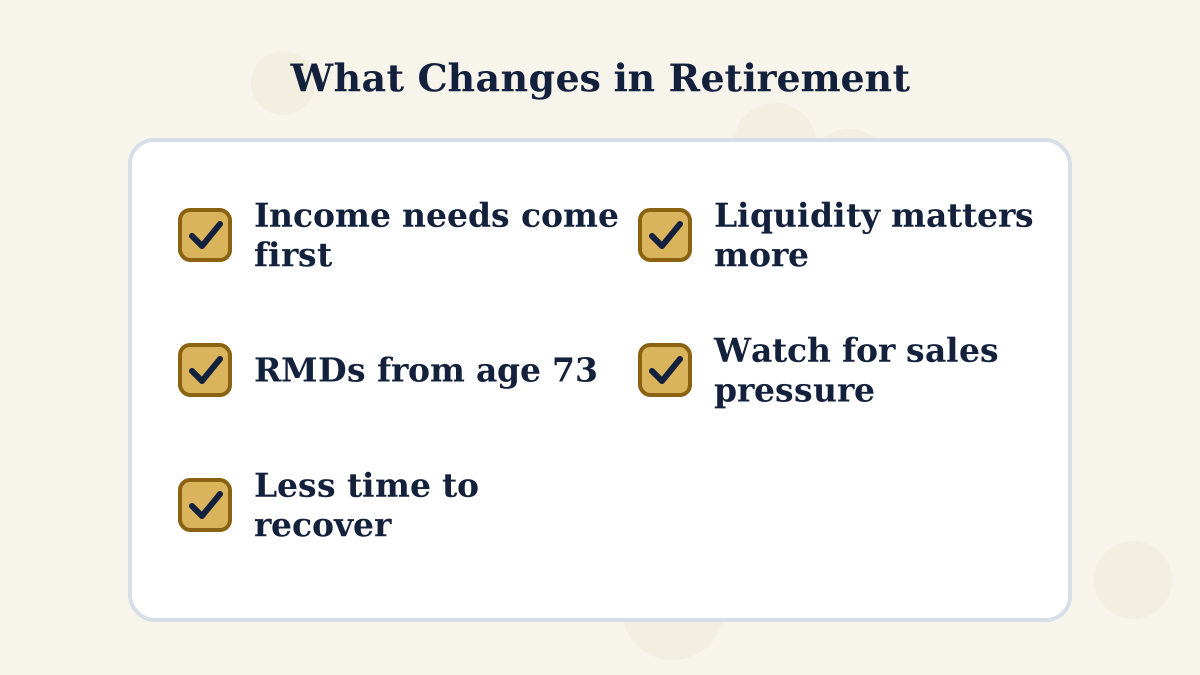
During your working years, a gold IRA can sit untouched. In retirement, you may need to draw on savings, and a traditional IRA must start paying out from 73. That means you'll eventually sell metal or take it out, so timing and liquidity matter more.
How Much Gold for Retirees
Commonly cited ranges run from about 5% to 10% of savings, with some suggesting retirees lean toward the upper end for stability. But retirees also need income and easy access to cash, which argues against going much higher.
| Gold Share | Amount in Gold | Rest of Savings |
|---|---|---|
| 5% | $30,000 | $570,000 |
| 8% | $48,000 | $552,000 |
| 10% | $60,000 | $540,000 |
Our how much gold to hold guide covers the factors in more depth.
Planning for RMDs
From 73, traditional IRA owners must take a minimum amount each year, based on the account's value. With a gold IRA, you can:
- Sell metal inside the IRA and take cash.
- Take coins or bars in kind, valued at the time of distribution.
- Keep cash in the IRA to cover several years of RMDs.
If you have other IRAs, you can usually take the combined RMD from any of them, which can let your gold stay put. Our gold IRA RMD guide explains the options. Roth IRAs have no RMDs for the original owner.
Liquidity and Income
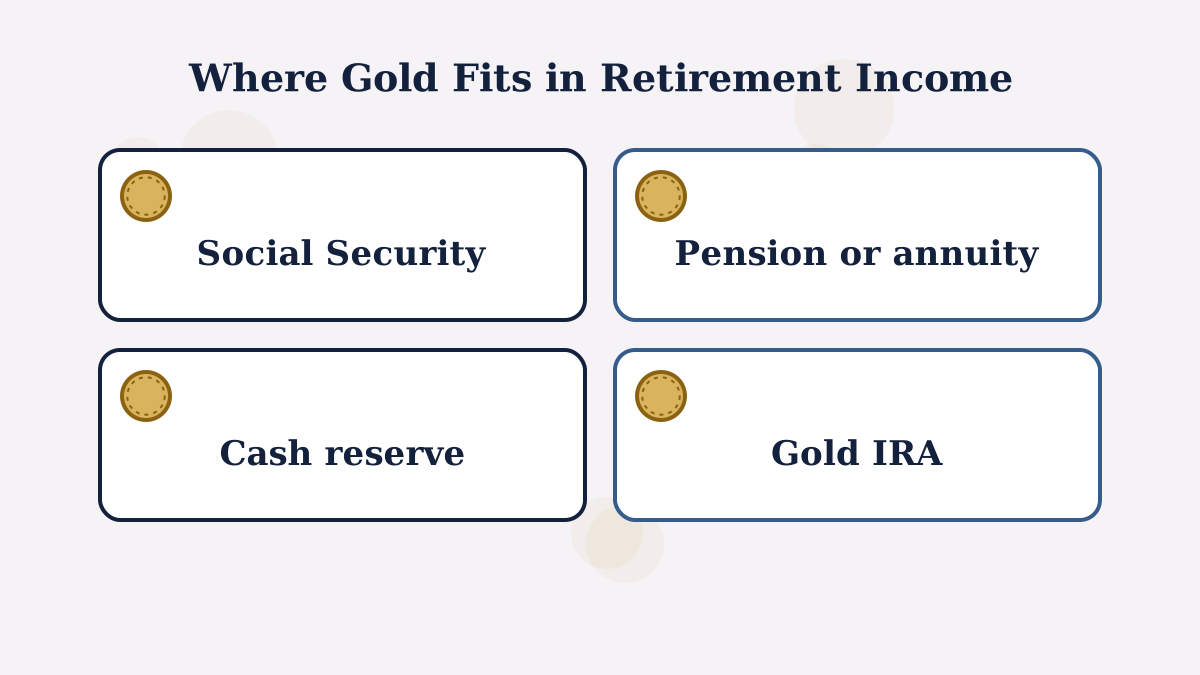
Gold doesn't pay interest or dividends. Retirees typically cover essential expenses with Social Security, pensions, annuities or income investments, and keep a cash reserve for emergencies.
A gold IRA fits best in the part of your savings you won't need to tap for several years, so you're not forced to sell during a price dip.
Fees on a Fixed Income
Flat yearly fees matter more when you're drawing down savings. Noble Gold publishes $125 a year for maintenance and $160 for storage. On a $50,000 gold IRA, that's about 0.6% a year, and it falls as a share as balances grow.
Add the dealer spread when you buy and sell. Ask what the company would pay to buy your metal back today. Our gold IRA fees guide compares companies.
Avoiding High-Pressure Sales
Regulators have repeatedly warned about gold sellers targeting older investors with fear-based pitches, pushing high-markup collector coins or urging people to move their entire savings. Protect yourself:
- Decide Your Share First
Know how much you're putting into gold before you talk to anyone.
- Get Every Fee in Writing
Setup, yearly fees, storage and the markup on each product.
- Prefer Common Bullion
Widely traded coins and bars are easier to value and sell.
- Take Your Time
A legitimate company won't rush you. Walk away from deadlines.
See our gold IRA scams guide for warning signs.
Passing Gold to Heirs
Gold IRAs pass to named beneficiaries like any IRA. Most non-spouse heirs must empty an inherited IRA within 10 years. Keep your beneficiary forms up to date. Our beneficiaries guide explains the options.
Opening a Gold IRA After You Retire
You can open a gold IRA at any age. Retirees usually fund one by rolling over a former employer's 401(k) or transferring part of an existing IRA. You can add new contributions only if you or your spouse have earned income.
If you're already taking RMDs, take the current year's RMD before rolling money over. RMD amounts can't be rolled into another IRA.
Gold IRA for Retirees FAQs
Is a gold IRA a good idea for retirees?
It can be, as a modest part of a diversified plan. Retirees should make sure they have enough income and cash, plan for RMDs and avoid putting too much into a single asset that pays no income.
Can I open a gold IRA after I retire?
Yes. You can roll over a 401(k) or transfer an IRA at any age. You can contribute new money only if you have earned income.
How do RMDs work with a gold IRA?
From age 73, traditional IRA owners must take required minimum distributions. You can sell metal for cash or take coins in kind. Keeping some cash in the IRA can help.
Can I take my gold home in retirement?
Yes, as an in-kind distribution. It's taxed like any IRA distribution from a traditional IRA, based on the metal's value.
How do I avoid being pressured into buying?
Decide your allocation first, ask for every fee and the buyback terms in writing, and walk away from anyone using fear or deadlines to rush you.
The Bottom Line
A gold IRA can steady a retiree's savings if it stays a modest share, RMDs are planned for and income needs are covered elsewhere. Choose a company that publishes its fees and doesn't pressure you.