A gold IRA generates two main forms. Form 5498, from your custodian, shows contributions, rollovers, conversions and the account's year-end fair market value. Form 1099-R, from whoever paid out, reports distributions and rollovers. You may also file Form 8606 or Form 5329 in some situations.
Most of the time, you just check that the forms match what you did and give them to your tax preparer.
The Main Forms
| Form | Who Sends It | What It Shows | When |
|---|---|---|---|
| Form 5498 | Your gold IRA custodian | Contributions, rollovers, Roth conversions, year-end value | Usually by May 31 |
| Form 1099-R | The plan or IRA that paid out | Distributions, direct rollovers, in-kind delivery | By January 31 |
| Form 8606 | You file it | Nondeductible contributions, conversions, some Roth distributions | With your return |
| Form 5329 | You file it | Early withdrawal penalties, excess contributions, missed RMDs | With your return when needed |
Form 5498
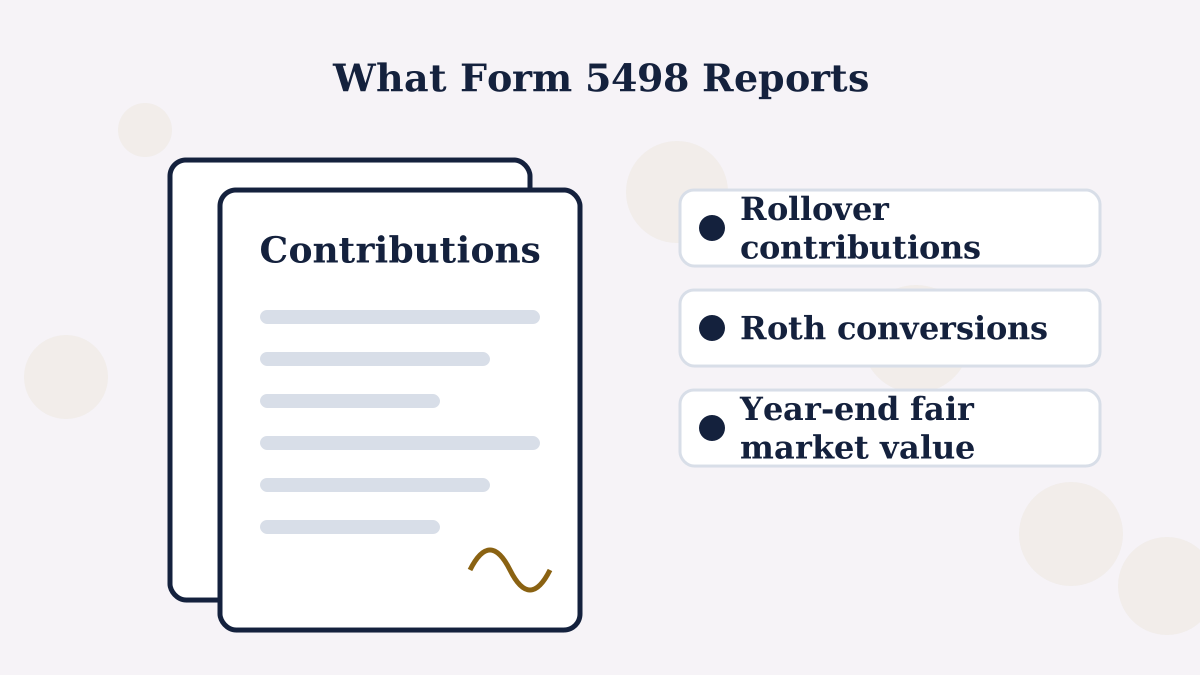
Your custodian files Form 5498 with the IRS and sends you a copy. It shows contributions for the year, rollover contributions received, Roth conversions and the fair market value of your IRA at year-end, including metal. That year-end value is used for next year's RMD.
You don't attach it to your tax return. Keep it with your records.
Form 1099-R
You'll receive a Form 1099-R from any plan or IRA that paid money or metal out during the year. A code in box 7 explains the type of distribution:
- Direct rollover from a 401(k) or similar plan is coded as non-taxable.
- Normal distribution after 59½ is taxable from a traditional IRA.
- Early distribution codes signal that a penalty may apply.
- In-kind distributions show the metal's fair market value.
Trustee-to-trustee transfers between IRAs generally don't generate a Form 1099-R at all.
Form 8606
You file Form 8606 if you make nondeductible traditional IRA contributions, convert to a Roth or take certain Roth distributions. It tracks your after-tax basis so you're not taxed twice later.
Form 5329
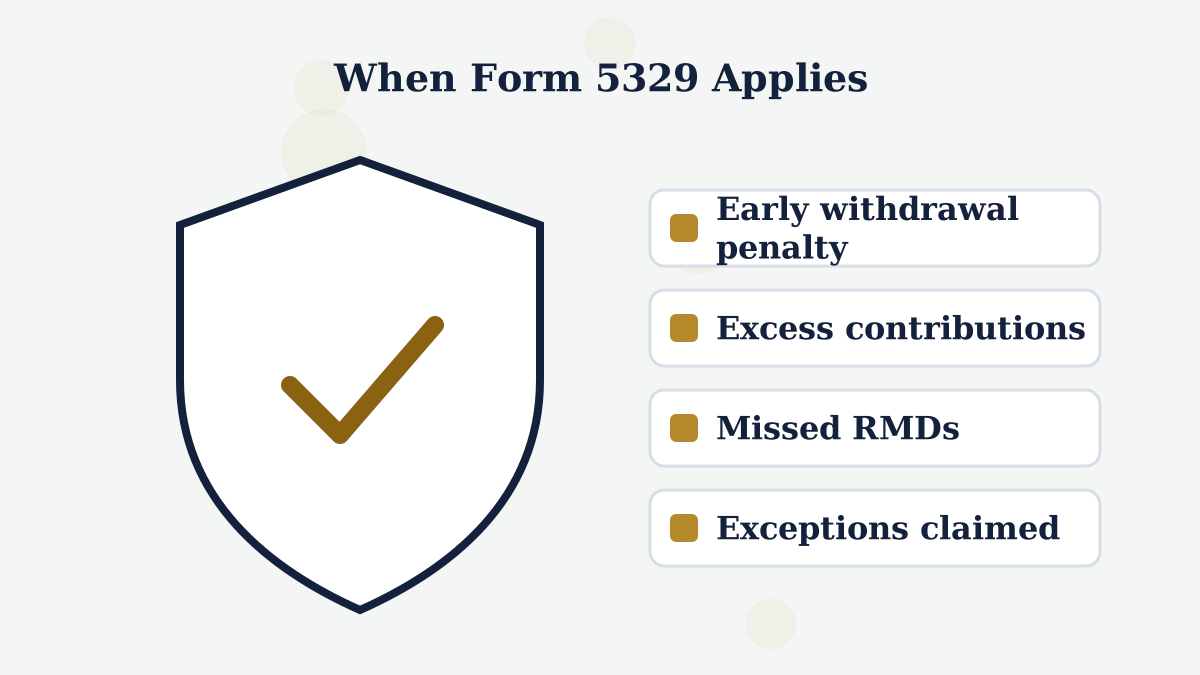
Form 5329 reports additional taxes, such as the 10% early withdrawal penalty, the 6% excise tax on excess contributions or the excise tax on a missed RMD. It's also where you claim certain exceptions or request a waiver.
Reporting a Rollover
For a direct rollover, the old plan's 1099-R shows the rollover code, and your new custodian's 5498 shows a rollover contribution. On your tax return, the gross amount is reported with zero taxable amount and a note that it was a rollover. For an indirect rollover completed within 60 days, you report it the same way. See our 60-day rule guide.
Checking Your Forms
- Match Amounts to Your Records
Compare with rollover confirmations and statements.
- Check the Distribution Code
Especially for rollovers and in-kind distributions.
- Confirm Year-End Value
On Form 5498, against your December statement.
- Ask for Corrections Quickly
Contact the issuer if anything is wrong.
In-Kind Distributions on Your Forms
When metal is shipped to you from a traditional gold IRA, the custodian reports its fair market value on the distribution date on Form 1099-R. That value is taxable income and becomes your cost basis in the coins. Keep the 1099-R with your records, since you'll need that basis if you later sell the metal outside the IRA.
Keeping Good Records
- Rollover and transfer confirmations, including dates and amounts.
- Purchase confirmations listing each product and price.
- Quarterly and year-end custodian statements.
- Copies of every Form 5498, 1099-R and 8606.
Good records make tax time faster and help your heirs if they inherit the account.
Gold IRA Tax Forms FAQs
What tax forms does a gold IRA send?
Form 5498 each year, showing contributions, rollovers and year-end value, and Form 1099-R for any year you take a distribution or do a rollover.
Do I file Form 5498 with my tax return?
No. The custodian files it with the IRS and sends you a copy for your records.
Is a direct rollover reported on Form 1099-R?
Yes, by the plan you rolled from, with a code showing it was a direct rollover and not taxable.
When do I need Form 8606?
When you make nondeductible traditional IRA contributions, convert to a Roth or take certain Roth distributions.
The Bottom Line
Gold IRAs mainly produce Form 5498 from your custodian and Form 1099-R for distributions or rollovers. Keep your records together, check codes and amounts, and use direct moves to keep reporting clean.