The 60-day rollover rule says that when an IRA or retirement plan pays money to you, you have 60 days to deposit it into another IRA or eligible plan to keep it tax-deferred. Miss the deadline and the amount is generally taxable, plus a 10% penalty if you're under 59½.
For IRA-to-IRA rollovers, you can do this only once in any 12-month period, across all your IRAs. The easiest way to avoid both rules is a direct rollover or transfer, which never pays you at all.
How the Rule Works
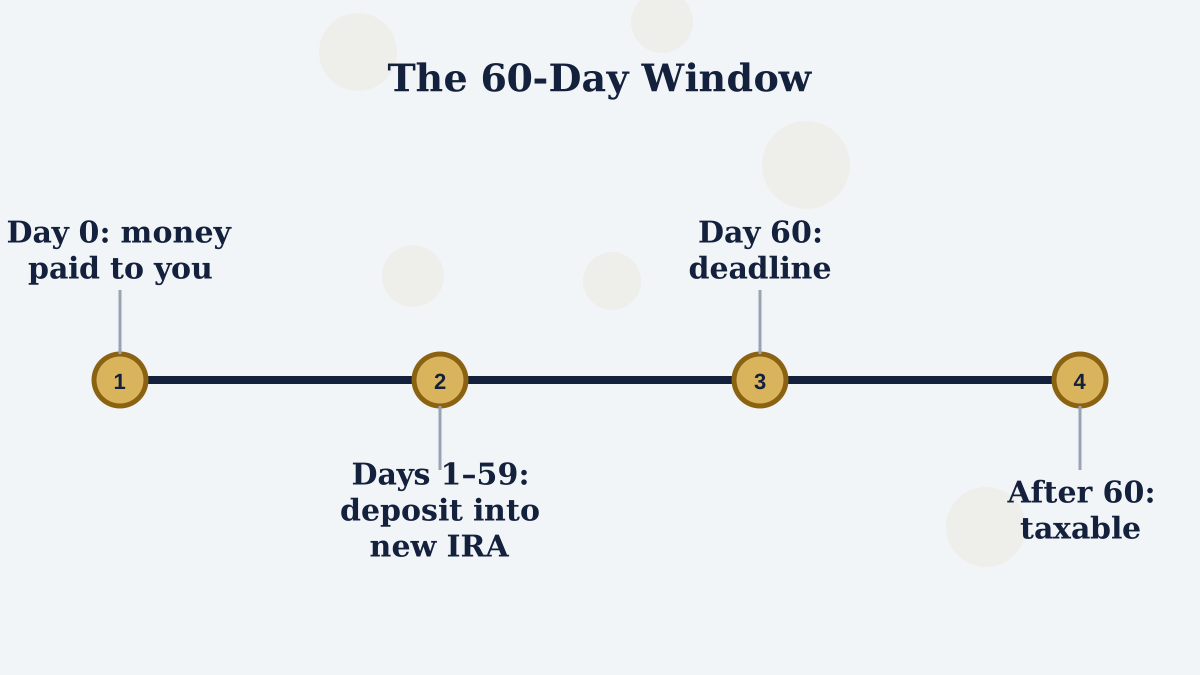
The clock starts the day you receive the money. You must deposit the full amount, not just what you received after withholding, within 60 days. Partial deposits are allowed, but any amount not redeposited becomes taxable.
The 20% Withholding Problem
Workplace plans like 401(k)s must withhold 20% for federal tax when they pay you directly. To roll over the full amount, you have to replace that 20% from other savings.
| Item | Amount |
|---|---|
| 401(k) balance | $50,000 |
| Withheld for tax | $10,000 |
| Check you receive | $40,000 |
| Must deposit within 60 days to avoid tax | $50,000 |
| If you deposit only $40,000 | $10,000 is taxable, plus 10% penalty under 59½ |
The withheld $10,000 comes back as a credit when you file your tax return, but only after the deadline has passed. IRA payouts usually let you choose withholding, but 10% is common by default.
The One-Rollover-Per-Year Limit
Since 2015, you can make only one IRA-to-IRA indirect rollover in any 12-month period, counting all your traditional and Roth IRAs together. A second one isn't a valid rollover: it's taxable and may be treated as an excess contribution.
| Move | Counts? |
|---|---|
| Indirect IRA-to-IRA rollover | Yes |
| Trustee-to-trustee IRA transfer | No |
| Direct rollover from a 401(k) or other plan | No |
| Indirect rollover from a 401(k) to an IRA | No |
| Roth conversion | No |
If You Miss the Deadline
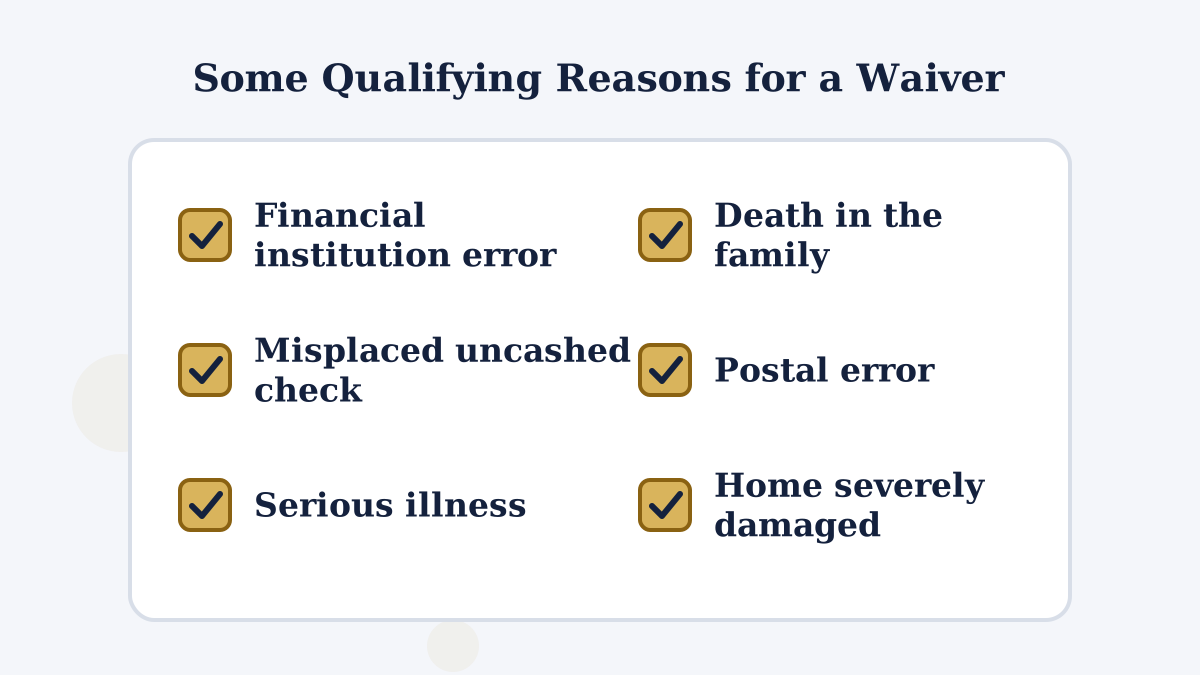
The IRS lets you self-certify that you missed the deadline for certain listed reasons, such as an error by the financial institution, a misplaced check that was never cashed, serious illness, a death in the family or severe damage to your home. Its current procedure, Revenue Procedure 2020-46, includes a model letter you give to the receiving custodian.
You must complete the rollover as soon as practical after the reason ends, generally within 30 days. Self-certification isn't an IRS waiver; the IRS can still review it later. For other situations, you can ask the IRS for a private letter ruling, which costs a fee.
Why Direct Moves Are Better for Gold IRAs
A direct rollover or transfer avoids every risk on this page: no withholding, no deadline and no once-a-year limit. It's also simpler. The gold IRA company and the custodians handle the paperwork, and the money goes straight to your new account. See our rollover vs. transfer guide.
When a 60-Day Rollover Happens Anyway
Sometimes you already have a check, perhaps from a closed plan or a distribution you took before deciding on gold. In that case:
- Open the gold IRA quickly.
- Deposit the full amount, including any withheld portion, within 60 days.
- Tell the custodian it's a rollover contribution so it's reported correctly on Form 5498.
- Keep records of the dates and amounts.
60-Day Rollover Rule FAQs
What is the 60-day rollover rule?
When an IRA or retirement plan pays money to you, you have 60 days to deposit it into another IRA or plan to keep it tax-deferred. After that, it's treated as a taxable distribution.
How often can I do a 60-day rollover?
For IRA-to-IRA rollovers, once in any 12-month period, counting all your IRAs together. Rollovers from workplace plans and direct transfers don't count toward the limit.
What if I miss the 60-day deadline?
The amount is generally taxable, plus a 10% penalty if you're under 59½. If you missed it for a qualifying reason, you may be able to self-certify for a waiver.
Does the 60-day rule apply to direct transfers?
No. Direct rollovers and trustee-to-trustee transfers never pay you, so there's no deadline.
The Bottom Line
The 60-day rule gives you a short window to redeposit money paid to you, with a once-a-year limit for IRA rollovers and a 20% withholding hurdle for plans. For a gold IRA, a direct rollover or transfer sidesteps all of it.