Sometimes. Gold has been a strong hedge during severe, unexpected inflation, like the 1970s, but a weak one year to year. Research from the World Gold Council found that changes in U.S. consumer prices explain only a small share of gold's price moves since 1971.
That doesn't make gold useless. It means you should treat it as a diversifier that can shine in crises and inflation shocks, not as an automatic match for the inflation rate.
Where the Reputation Comes From: 1971 to 1980
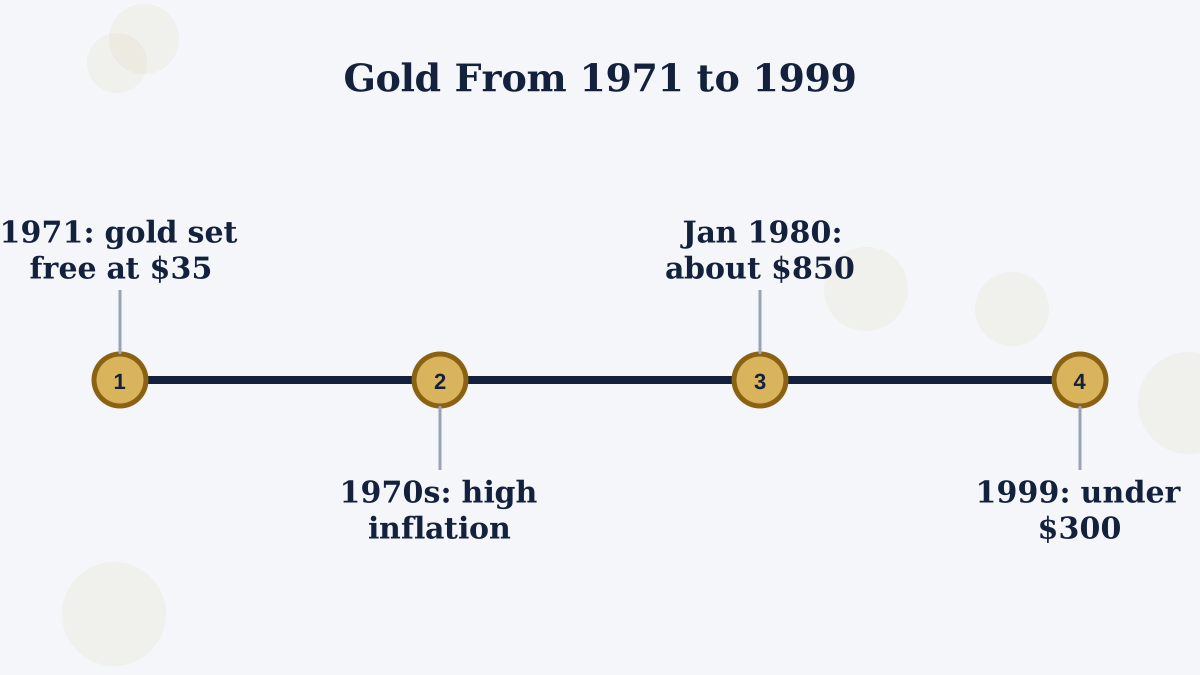
In 1971, the U.S. ended the dollar's convertibility into gold at $35 an ounce. Over the following decade, inflation surged with oil shocks and loose policy. Gold rose to about $850 an ounce by January 1980.
That run created gold's image as the ultimate inflation hedge. But it began from an artificially fixed price, which made the move unusually large.
The Other Side: 1980 to 1999
To beat inflation, the Federal Reserve pushed interest rates very high in the early 1980s. Cash and bonds suddenly paid well above inflation, and gold lost its appeal.
Academic research found that gold's inflation-adjusted price fell about two-thirds in the five years after its 1980 peak. By 1999, gold was below $300 an ounce, even though consumer prices had roughly doubled. Someone who bought at the top waited decades to break even in real terms.
What Moves Gold More Than Inflation
Real Interest Rates
When rates after inflation are low or negative, holding gold costs less, and it tends to do better.
The U.S. Dollar
Gold is priced in dollars, so a weaker dollar often lifts its price.
Central Bank Buying
Large purchases by central banks have supported demand in recent years.
Fear and Uncertainty
Crises and political shocks often send investors toward gold.
Our what drives gold prices guide covers each factor in more depth.
Recent Years
Gold rose to record highs in the 2020s, reaching about $5,608 an ounce in January 2026, before easing to around $4,000 by early November 2026. Analysts have pointed to central bank buying, geopolitical worries and interest rate expectations as drivers, not inflation alone.
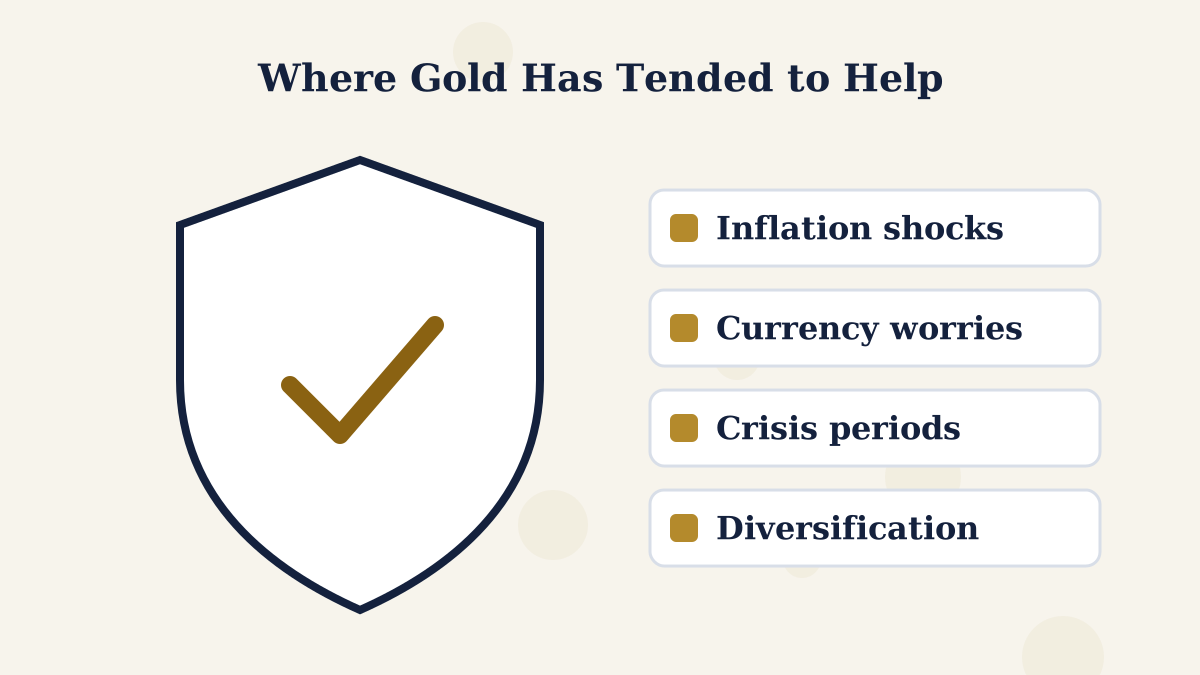
The lesson: gold can rise strongly in some inflationary periods and lag in others. Timing purchases on inflation headlines is risky.
Other Inflation Hedges to Know
Gold isn't the only option. Treasury Inflation-Protected Securities adjust directly with consumer prices. Stocks have tended to outpace inflation over long periods, and real estate and commodities can help too.
Many planners spread inflation protection across several of these rather than relying on one. Gold fits as part of that mix.
What This Means for a Gold IRA
If you're opening a gold IRA mainly to beat inflation, set realistic expectations. Gold may help in a severe inflation scenario, but it can also fall while prices rise.
A modest allocation, held for the long term and rebalanced each year, is how many savers use it. See our how much gold to hold guide.
How Gold Compares With Other Hedges
| Asset | How It Responds to Inflation | Main Trade-Off |
|---|---|---|
| Gold | Strong in shocks, weak year to year | No income; can fall in real terms for years |
| TIPS | Adjusts directly with consumer prices | Lower expected returns |
| Stocks | Have tended to beat inflation long term | Can fall sharply in the short term |
| Real estate | Rents and values often rise with prices | Costly and hard to sell |
No single hedge is perfect, which is why many plans spread protection across several.
Is Gold a Good Inflation Hedge FAQs
Does gold go up with inflation?
Sometimes, but not reliably year to year. Gold soared during the high inflation of the 1970s, but fell in real terms during much of the 1980s and 1990s even as prices kept rising.
Why didn't gold keep up with inflation in the 1980s?
The Federal Reserve raised interest rates sharply, so savers could earn high real returns on cash and bonds. That reduced gold's appeal, and its price fell from its 1980 peak.
What matters more to gold than inflation?
Many analysts point to real interest rates, meaning rates after inflation. When real rates are low or negative, gold tends to do better. The dollar, central bank buying and investor fear also matter.
Is gold a long-term store of value?
Over very long periods, gold has broadly kept purchasing power, but with long stretches of losses in real terms. It's best viewed as a diversifier, not a guaranteed hedge.
The Bottom Line
Gold's record as an inflation hedge is real but uneven. It has helped most in inflation shocks and crises, and least when real interest rates were high. Treat it as a diversifier within a broader plan.