Gold has often held up better than stocks during recessions, which is a big part of its appeal as a diversifier. But it's not a guaranteed winner. It has fallen in some downturns, and it often dips at the start of a crisis as investors sell anything they can to raise cash.
The pattern in 2008 and 2020 was similar: a sharp early drop, then a strong recovery as interest rates fell and fear set in. Here's what the record shows and what it means for you.
What Past Recessions Show
| Period | What Gold Did | Context |
|---|---|---|
| 1973–1975 | Roughly doubled, about $95 to $178 | Oil shock and high inflation |
| 1981–1982 | Weak | Very high interest rates |
| 2007–2009 | Dipped hard in late 2008, ended 2008 roughly flat, then surged | Financial crisis, rate cuts |
| 2020 | Sharp March drop, then record highs by August | Pandemic, emergency stimulus |
One analysis from CME Group found that across eight recessions from 1973 to 2020, gold outperformed the S&P 500 in all but two. That's a strong record, but it also shows the exceptions are real.
2008: The Early Dip, Then the Rally
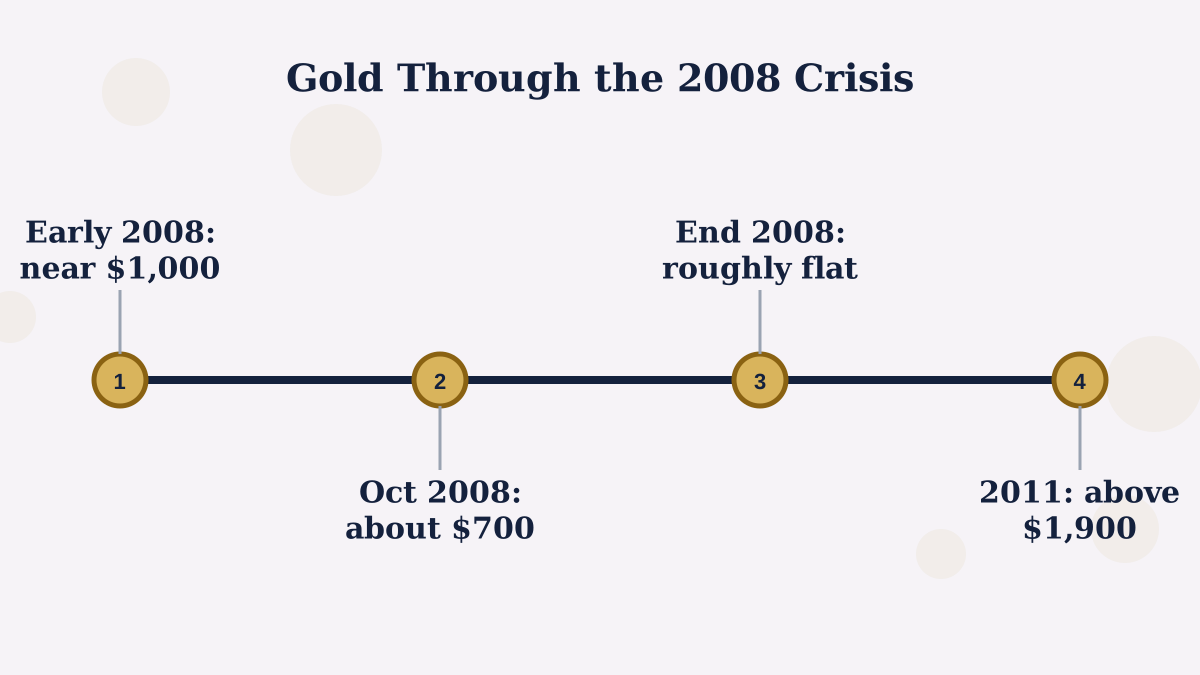
When the financial crisis hit, investors sold almost everything for cash, and gold fell from near $1,000 to about $700 in October 2008. Stocks fell much further, losing more than half their value from peak to trough.
Gold finished 2008 about where it started. Then, as the Federal Reserve cut rates to near zero and launched stimulus, gold climbed above $1,900 by 2011. Anyone who sold during the October panic missed that rebound.
2020: A Faster Version
In March 2020, gold saw some of its biggest daily drops as markets sold off. Within months, it reversed and hit records above $2,000 an ounce by August 2020, helped by rate cuts and stimulus.
The lesson from both: gold's crisis role tends to show up after the initial liquidity rush, not during it.
Why Gold Tends to Hold Up
- Lower rates: central banks usually cut rates in recessions, reducing the cost of holding a metal that pays no interest.
- Fear: uncertainty pushes investors toward assets seen as safe.
- No default risk: physical gold doesn't depend on a company's profits or a borrower's ability to pay.
When Gold Disappoints
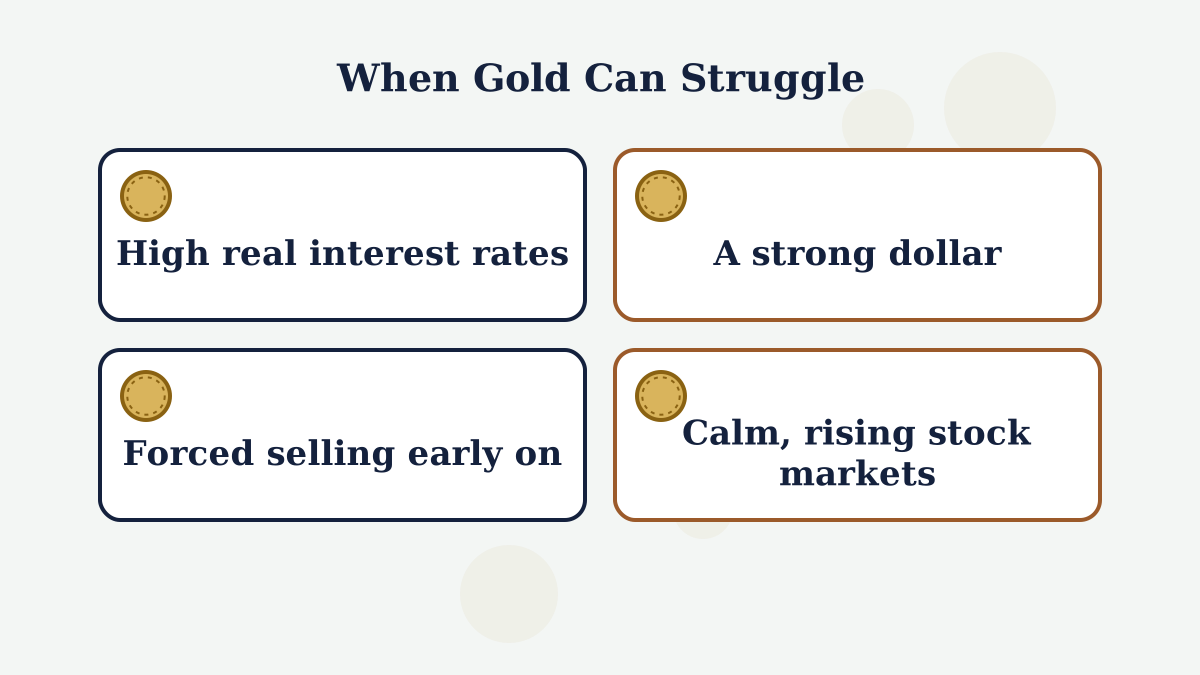
Gold struggled in the early 1980s recession, when interest rates were very high. High real rates make cash and bonds more attractive. A recession with high rates or a strong dollar can be tough for gold.
That's why we'd treat gold as one part of a diversified plan, not a recession bet.
What This Means for a Gold IRA
Don't Buy in a Panic
Prices can spike on fear. A steady, planned allocation usually beats chasing headlines.
Don't Plan to Sell Mid-Crisis
Keep enough cash so you're never forced to sell metal during an early dip.
Think in Years
Gold's recovery after 2008 took months to start and years to fully play out.
Retirees with required distributions should be especially careful about liquidity. Our gold IRA for retirees guide covers how to plan for that.
Gold vs. Stocks in Downturns
The main reason people hold gold for recessions is that it often moves differently from stocks. In 2008, stocks fell more than half from peak to trough while gold ended the year about flat. That difference can soften losses in a diversified portfolio.
It doesn't mean gold always rises when stocks fall. In some downturns, both have dropped together, at least for a while. The benefit is diversification, not a guaranteed offset.
Silver Behaves Differently
Silver is more tied to industry, so it can fall harder in recessions. During the 2008 crisis, silver dropped much more than gold before recovering. If you hold both metals, expect silver to be the bumpier part. Our gold vs. silver IRA guide compares them.
Gold in a Recession FAQs
Does gold go up in a recession?
Often, but not always. Gold has tended to hold up better than stocks in most recessions since the 1970s, though it has fallen in some and often dips at the start of a crisis.
What happened to gold in 2008?
Gold fell from near $1,000 to about $700 during the October 2008 panic as investors sold assets for cash. It ended the year roughly flat and rose above $1,900 by 2011.
What happened to gold in 2020?
Gold dropped sharply in March 2020 during the initial selloff, then climbed to record highs above $2,000 by August 2020.
Why does gold sometimes fall at the start of a crisis?
In a panic, investors and funds sell easy-to-sell assets, including gold, to raise cash or meet margin calls. Gold has often recovered once that selling passes.
The Bottom Line
Gold has a solid, but not perfect, record in recessions. It often dips early, then recovers as rates fall and fear rises. A modest, long-term gold position is how many savers use it to soften downturns.