A gold IRA owns physical coins and bars stored in a vault in your IRA's name. A gold ETF is a fund that holds gold, and you own shares of the fund, usually inside a normal brokerage IRA. Both track gold's price. The difference is what you own, what it costs and how easy it is to trade.
As a rule of thumb, a gold ETF is the cheaper, simpler choice for small amounts or if you only want price exposure. A gold IRA makes more sense when you want to own the metal itself and you're moving enough money that flat fees stay small.
What You Actually Own
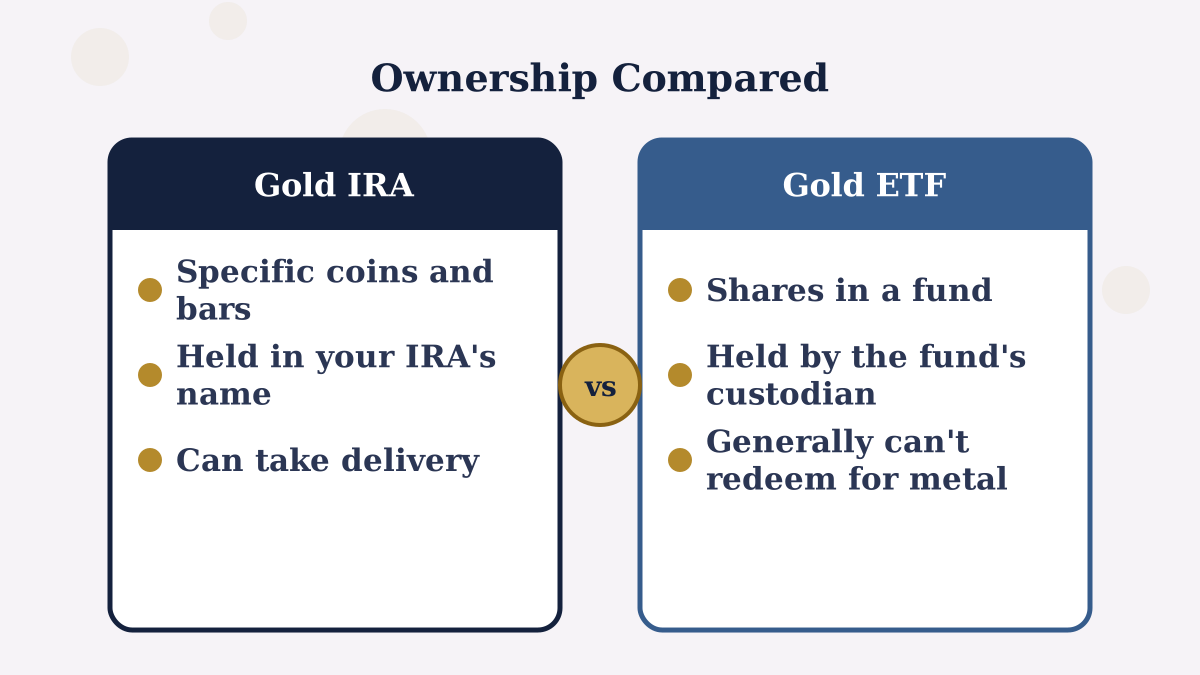
With a gold IRA, your account owns specific IRA-eligible coins or bars at an approved depository. You can see them on your custodian's statement, and you can take them out as an in-kind distribution.
With a physically backed gold ETF, the fund owns gold in its own vaults, and you own shares representing a slice of the fund. You can't usually exchange shares for bars. You rely on the fund's structure and custodians.
What it means for you: if your reason for owning gold is to hold something outside the financial system, the gold IRA matches that goal. If you simply want your portfolio to rise and fall with gold's price, an ETF does that efficiently.
Costs Compared
The cost structures are completely different, so the cheaper option depends on your balance.
- Gold ETF: a yearly expense ratio, typically around 0.25% to 0.40% of your holding, plus tiny trading spreads.
- Gold IRA: usually a one-time setup fee, flat yearly custodian and storage fees, and a dealer spread when you buy.
| Balance | Gold ETF at 0.25%–0.40% | Gold IRA at $285 Flat (Noble Gold's Published Fees) |
|---|---|---|
| $10,000 | $25–$40 | $285 |
| $25,000 | $63–$100 | $285 |
| $50,000 | $125–$200 | $285 |
| $100,000 | $250–$400 | $285 |
| $250,000 | $625–$1,000 | $285 |
The gold IRA also carries a dealer spread on purchases, usually larger than an ETF's trading spread, so the ETF is clearly cheaper for small balances. Around $100,000 and up, a flat-fee gold IRA's yearly cost can match or beat an ETF's. Our gold IRA fee calculator helps you compare.
Liquidity and Convenience
ETFs win on convenience. You can buy or sell shares in seconds during market hours, in any amount, from an account you probably already have.
Selling gold IRA metal takes a few days: you request a bid, the custodian approves the sale and the proceeds settle. That's fine for long-term holding, but less handy if you like to adjust your portfolio often.
Taxes
Inside any IRA, the tax rules are the same: traditional IRA withdrawals are taxed as ordinary income, and qualified Roth withdrawals are tax-free. So the tax difference only matters outside an IRA.
In a taxable account, gains on physically backed gold ETFs are generally taxed like collectibles, at up to 28% for long-term gains, the same as physical gold. That's one reason many people prefer to hold gold exposure inside an IRA either way.
Who Each Option Suits
A Gold ETF Suits You If
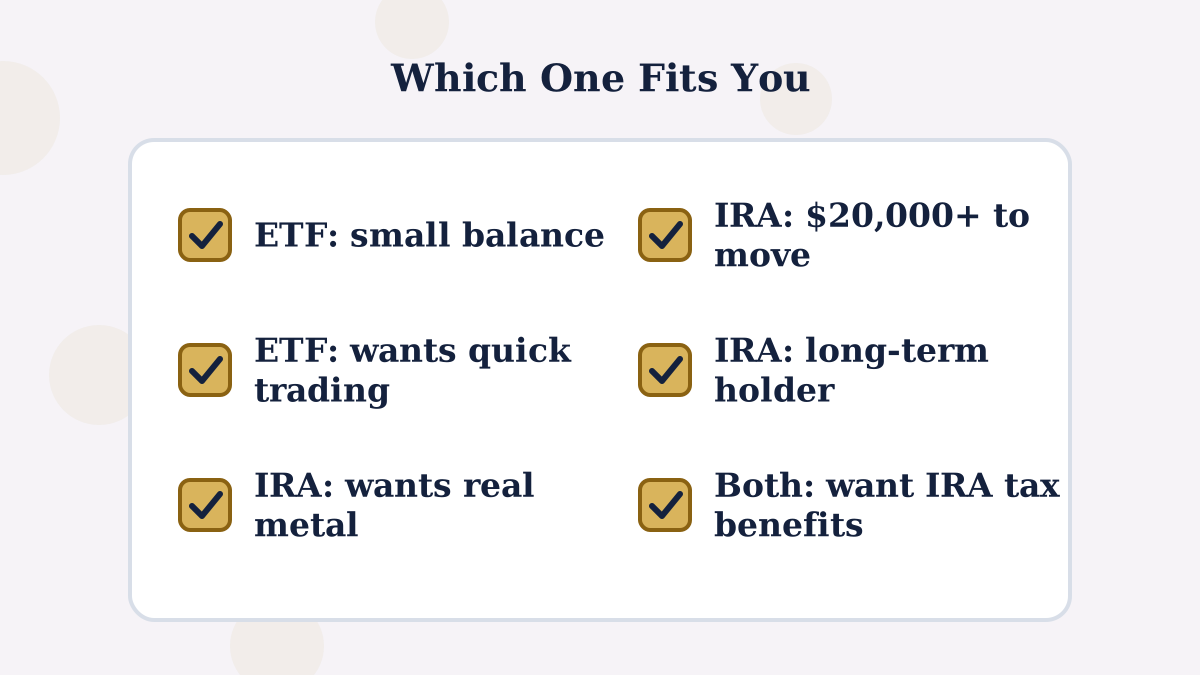
You have a smaller amount, already have a brokerage IRA, want to trade easily or only care about gold's price.
A Gold IRA Suits You If
You want to own specific metal, plan to hold for years and are moving $20,000 or more.
Some People Use Both
A gold IRA for the long-term core, plus an ETF for flexible adjustments.
Wondering whether your current IRA can hold gold? See can you buy gold in a regular IRA.
Gold Mining Stocks Are Different
Gold mining stocks and mining funds aren't the same as gold. Their prices depend on each company's costs, debt and management, and they tend to swing more than gold itself. They can pay dividends, which gold doesn't, but they add company risk. If your goal is to own gold, a gold IRA or a physically backed ETF is the more direct route.
Gold IRA vs Gold ETF FAQs
Is a gold ETF or a gold IRA better?
A gold ETF is cheaper and easier for small amounts and for investors who only want price exposure. A gold IRA suits savers who want to own physical metal and are moving enough money that flat fees stay small.
Can I buy a gold ETF in my existing IRA?
Usually, yes. Most brokerage IRAs let you buy gold ETFs just like stock ETFs, with no special account needed.
Do gold ETFs hold real gold?
Physically backed gold ETFs hold gold bullion in vaults on behalf of the fund. As a shareholder, you own fund shares, not specific bars, and you generally can't redeem shares for metal.
How are gold ETFs taxed?
Inside an IRA, they follow normal IRA tax rules. In a taxable account, gains on physically backed gold ETFs are generally taxed at collectibles rates of up to 28%.
The Bottom Line
A gold ETF is the low-cost, flexible way to get gold exposure, especially for smaller balances. A gold IRA is the way to own physical metal inside a retirement account, and at larger balances its flat fees become very competitive.
If owning real metal is the point for you, start by seeing how a gold IRA works with a company that publishes its fees.