Rebalancing brings your gold share back to its target after prices move. If gold rises and becomes too large a share, you trim by selling some metal. If it falls below target, you add. Inside IRAs, both are tax-free, so the main cost is the dealer spread.
Most people check once a year, or when their gold share drifts a few percentage points from target.
Why Rebalance
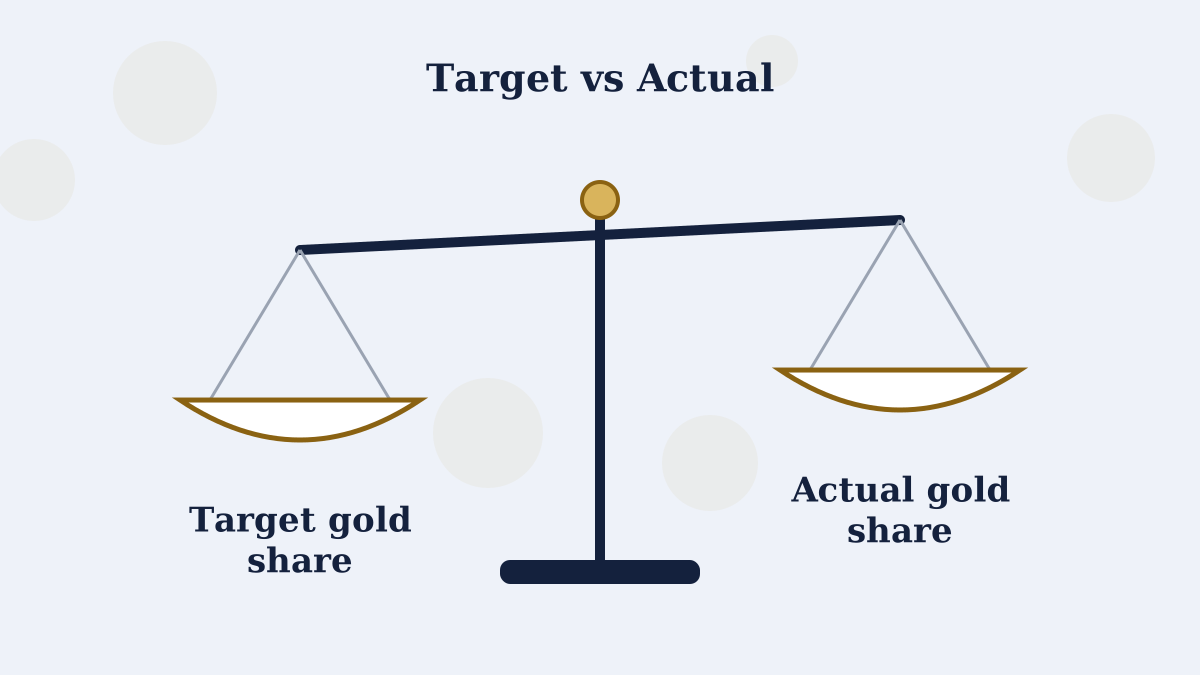
Gold reached about $5,608 an ounce in January 2026 and was near $4,000 by early November. Moves like that can push a 7% target to 10% or 5% in months. Without rebalancing, your risk drifts away from the plan you chose.
Rebalancing also builds a habit of trimming after big gains and adding after falls, rather than chasing headlines.
A Simple Rebalancing Routine
- Set a Target and Range
For example, 7% gold with a range of 5% to 9%.
- Review Once a Year
Add up all your gold, inside and outside IRAs.
- Trim If Above the Range
Sell metal inside the gold IRA; keep cash in the IRA or transfer it to another IRA.
- Add If Below the Range
Transfer money into the gold IRA or buy with cash already there.
Example
| Before | After Rebalancing | |
|---|---|---|
| Total savings | $400,000 | $400,000 |
| Gold | $40,000 (10%) | $28,000 (7%) |
| Other investments | $360,000 | $372,000 |
| Action | — | Sell $12,000 of metal inside the IRA |
The $12,000 stays in the IRA as cash or moves by transfer to another IRA, with no tax. Figures are illustrative.
Moving Money Between IRAs
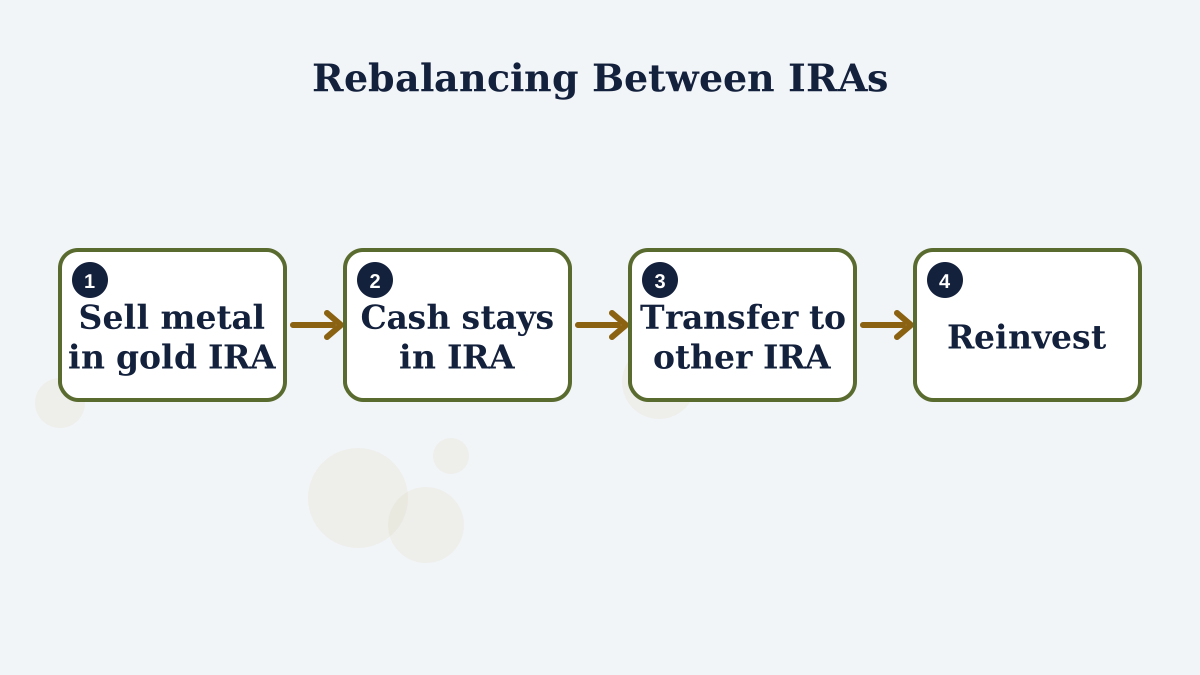
If your other investments are in a separate IRA, you can sell metal and transfer the cash by trustee-to-trustee transfer. Going the other way, you can transfer cash into the gold IRA to buy more metal. Direct transfers aren't taxed or limited.
Costs to Keep in Mind
Each sale involves the buyback spread, and each purchase a premium. That's why it's sensible to use a range rather than a fixed number. Small adjustments may cost more than they're worth.
Rebalancing Between Metals
If you hold both gold and silver, their prices can diverge. You can rebalance between them inside the IRA too, selling one and buying the other without tax. See our gold vs. silver IRA guide.
Rebalancing in Retirement
In retirement, rebalancing can double as RMD planning. Trimming metal after a rally can build a cash buffer in the IRA for future RMDs. See our gold IRA for retirees guide.
Rebalancing With New Money
You don't always have to sell to rebalance. If gold is below target, you can direct new IRA contributions or a transfer into the gold IRA. If gold is above target, you can steer new savings into your other investments instead. That avoids paying a spread just to rebalance, though it works more slowly.
Tracking Your Gold Share
Keep a simple record of every account that holds gold: the gold IRA, gold funds in a 401(k) or brokerage account, and any coins at home. Add them up once a year and divide by your total savings. That's the number to compare with your target.
Rebalancing a Gold IRA FAQs
How often should I rebalance a gold IRA?
Many people review once a year, or when their gold share drifts several percentage points from target.
Is rebalancing inside a gold IRA taxable?
No. Selling or buying metal inside an IRA isn't taxed.
How do I add gold when it's below target?
Transfer money from another IRA into the gold IRA, add a contribution or use cash already in the account to buy metal.
Does rebalancing cost money?
Yes. Each sale and purchase involves a dealer spread, so many people rebalance only when the drift is meaningful.
The Bottom Line
Rebalancing keeps your gold share where you planned it. Review yearly, act when you're outside your range and use the IRA's tax-free status to sell and buy without tax bills. Keep spreads in mind so you don't over-trade.