To buy physical silver, choose common products like Silver Eagles, Maple Leafs or .999 bars, compare the price over spot, buy from a reputable seller and plan storage for a metal that's much bulkier than gold. Silver premiums usually run higher than gold's, especially on coins.
At about $52 an ounce in early November 2026, silver lets you buy in small amounts, but it also swings more in price than gold.
Silver Products Compared
| Product | Premium | Notes |
|---|---|---|
| 100 oz or 1 kilo bar | Lowest per ounce | Heavy; hard to sell in part |
| 10 oz bar | Low | Good balance of value and flexibility |
| 1 oz bar or round | Moderate | Small and tradable |
| Canadian Maple Leaf | Higher | High purity, widely known |
| American Silver Eagle | Often highest | Very recognizable and easy to sell |
| Pre-1965 "junk" silver | Often near melt | 90% silver; not IRA-eligible |
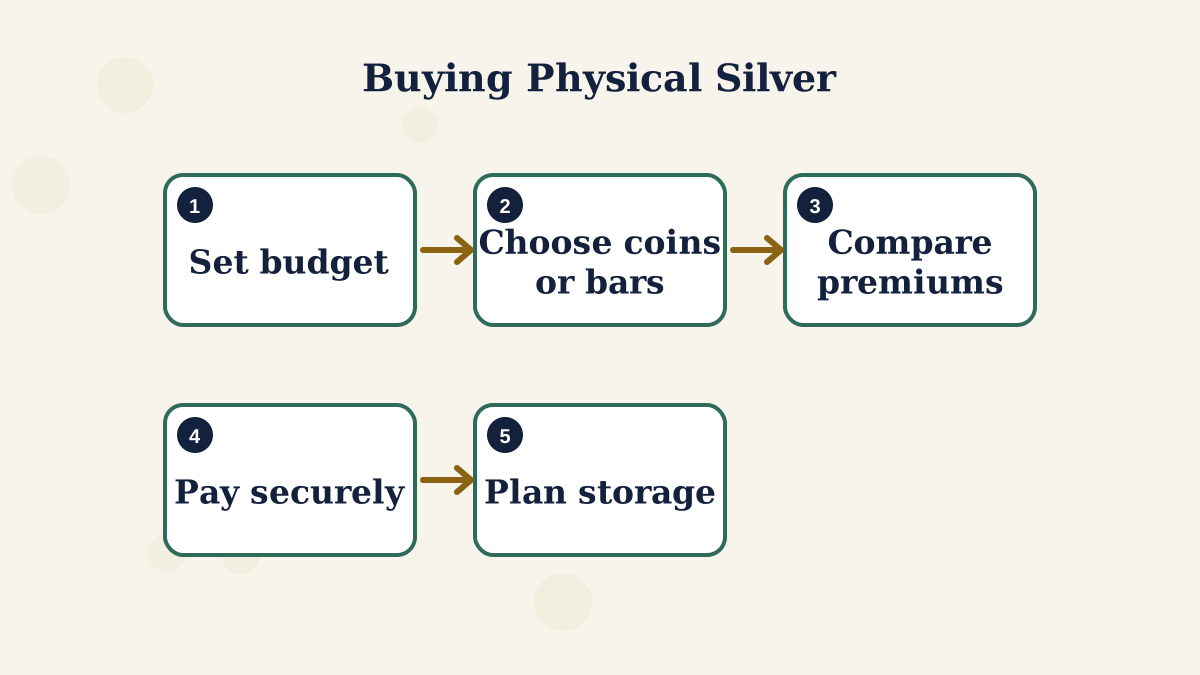
Steps to Buy Silver
- Decide How Much
Silver is more volatile than gold, so keep it a modest share.
- Choose a Mix
Bars for value, coins for flexibility.
- Compare Premiums
Same product, same day, including shipping.
- Pay Securely
Wire or check often costs less than cards.
- Plan Storage
Silver takes up a lot of space.
Why Silver Premiums Are Higher
Minting and shipping costs are similar per coin whether it's gold or silver, but silver's price per ounce is far lower. That makes those costs a bigger share of the price. Demand surges also hit popular silver coins hard. See our premiums over spot guide.
Storage: Silver Is Bulky

At $52 an ounce, $10,000 of silver is about 190 ounces, roughly 13 pounds. The same value in gold fits in your palm. Plan for a safe with enough room, and check your insurance. Many homeowners policies cover only a small amount of precious metals without a rider. See our storing gold at home guide.
Selling Silver
Silver is easy to sell to local coin shops and online dealers. Common coins and well-known bars get the best prices. Expect a wider spread than gold, especially on coins. See our how to sell physical gold guide, which applies to silver too.
Taxes
Physical silver is a collectible for tax purposes, like gold. Long-term gains are taxed at your ordinary rate, up to 28%. Keep receipts for your basis. See our physical gold taxes guide.
Silver at Home or in an IRA?
Holding silver at home gives you direct access. A silver IRA keeps it in a depository with IRA tax treatment and storage handled for you. See our silver IRA guide.
Common Silver Buying Mistakes
- Paying collector prices for "limited" or graded silver coins.
- Buying only Silver Eagles, which often carry the highest premiums.
- Ignoring shipping costs, which weigh more on heavy silver orders.
- Underestimating storage space for larger purchases.
An Example
Say you have $5,000 for silver at a spot price of $52. Buying nine 10 oz bars at about 6% over spot would get you roughly 90 ounces. Buying Silver Eagles at about 20% over spot would get you closer to 80 ounces. The bars put more metal in your hands; the Eagles are easier to sell one at a time. Figures are illustrations.
How to Buy Physical Silver FAQs
What's the best way to buy physical silver?
Buy common products like Silver Eagles, Maple Leafs or .999 bars from a reputable dealer, and compare the price over spot carefully, since silver premiums vary widely.
Are silver coins or bars better?
Bars usually have much lower premiums per ounce. Coins are more recognizable and easier to sell in small amounts.
Is junk silver a good buy?
Pre-1965 U.S. coins often sell near their silver value and are easy to trade in small amounts, but they're 90% silver and can't go in an IRA.
How is physical silver taxed?
Like gold, as a collectible. Long-term gains are taxed at your ordinary rate up to a 28% maximum.
The Bottom Line
Buying silver is easy, but premiums and bulk matter more than with gold. Favor bars for value, add a few coins for flexibility, compare prices closely and plan storage before you buy.