To sell physical gold for a fair price, know its melt value at today's spot, get at least two quotes from reputable bullion dealers or coin shops, choose a secure payment method and report the gain at tax time. Common bullion like Gold Eagles and accredited bars sells easily, usually close to spot.
Pawn shops and cash-for-gold buyers often pay much less for bullion, so compare first.
Steps to Sell
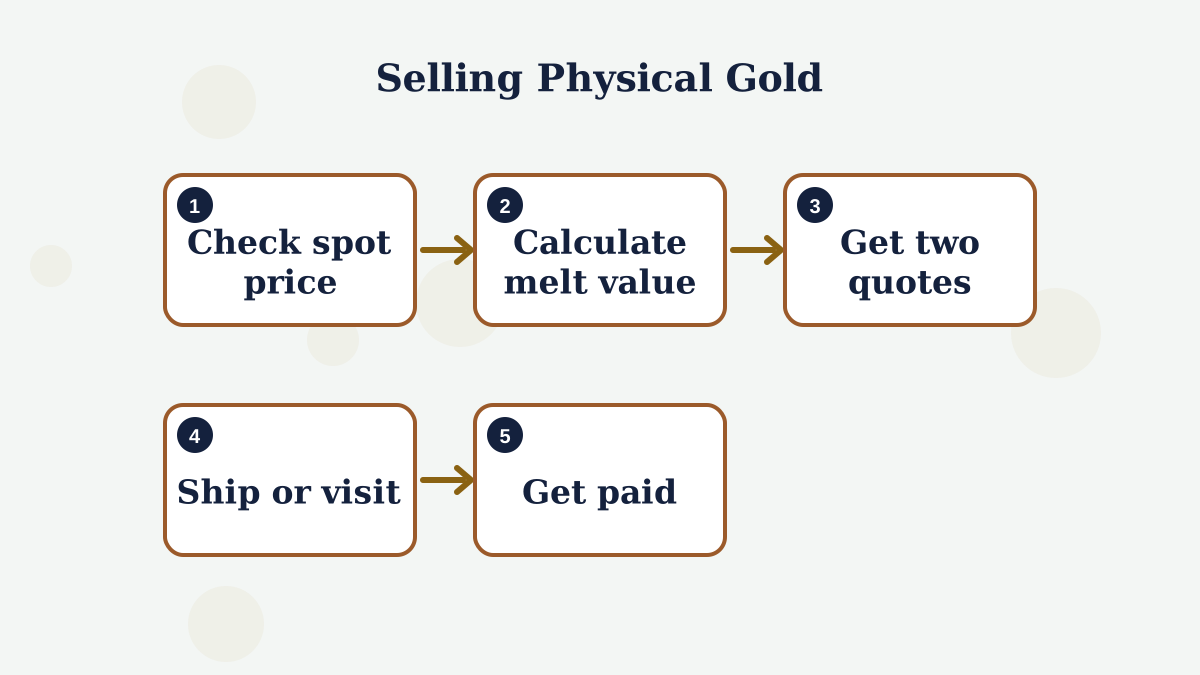
- Check Spot and Melt Value
Gold weight × spot price.
- Gather Your Pieces and Receipts
Original packaging and assay cards can help.
- Get At Least Two Quotes
Online dealers, local coin shops or the company you bought from.
- Choose How to Deliver
In person, or insured shipping with the dealer's instructions.
- Get Paid Securely
Wire or check, depending on the dealer.
Where to Sell
| Buyer | Typical Price for Bullion | Notes |
|---|---|---|
| Online bullion dealer | Competitive | Insured shipping; posted buy prices |
| Local coin shop | Often competitive | Immediate payment possible |
| Company you bought from | Varies | Ask for a written buyback quote |
| Pawn shop or cash-for-gold | Often low | Better for jewelry than bullion |
What Affects the Price
Dealers pay based on spot and how easy your product is to resell. Common coins and accredited bars get the best bids. Damaged coins, unknown brands and fractional pieces may get less. Demand matters too: when buyers flood in, dealers may pay more; when sellers flood in, bids may drop.
Selling Safely
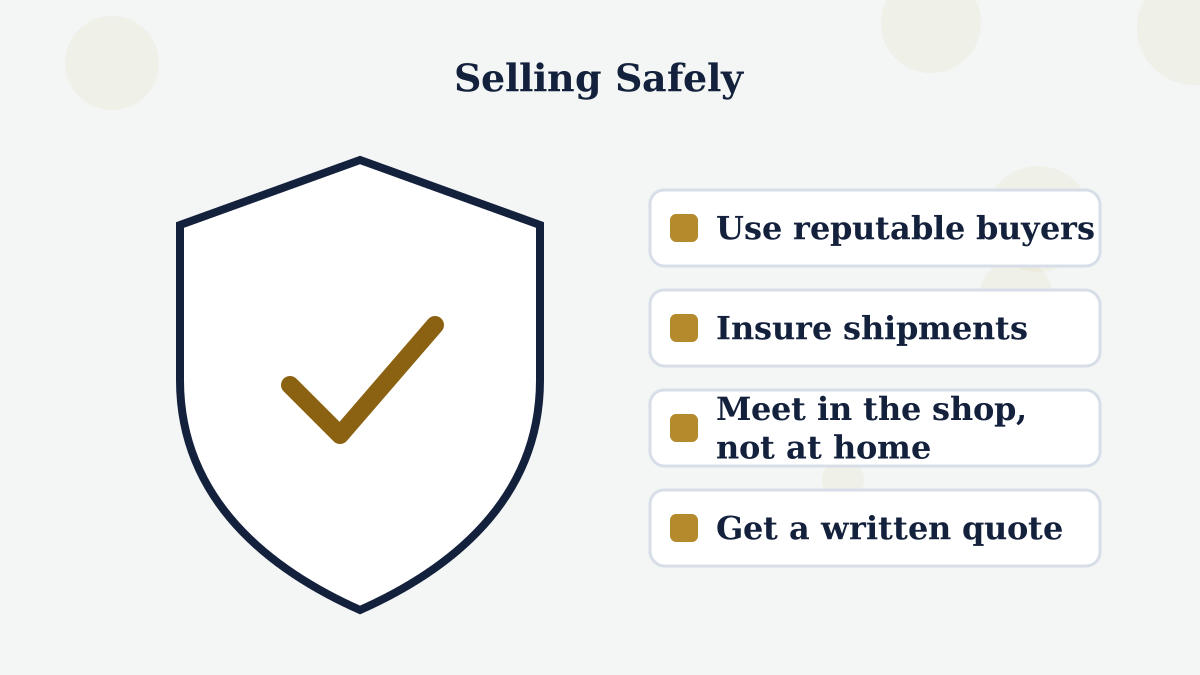
- Sell to established businesses with a track record.
- Use insured shipping with tracking and signature.
- For in-person sales, go to the shop; don't invite buyers home.
- Get the quote in writing or on screen before you ship.
Taxes on the Sale
Your gain is the sale price minus your cost basis, which includes the premium you paid. Gold held more than a year is taxed as a collectible, up to 28%. Some dealer sales are reported on Form 1099-B, depending on the product and quantity; either way, you report the gain. See our physical gold taxes guide.
Selling Gold in an IRA Is Different
Gold in an IRA is sold through your custodian, and the cash stays in the IRA with no tax unless you withdraw it. See our how to sell gold in an IRA guide.
An Example
Say you own five 1 oz Gold Eagles bought for $19,000 in total, and spot is now $4,000. Melt value is $20,000. Dealer A bids $3,980 per coin; Dealer B bids $4,020. Selling to Dealer B brings $20,100, a $1,100 gain over your basis. If you've held them more than a year, that gain is a long-term collectibles gain. Figures are illustrations.
Selling Jewelry and Scrap
Gold jewelry and scrap are priced differently from bullion. Buyers test the karat and pay a share of the melt value, often well below spot, to cover refining. Get several offers and know the weight and karat before you sell.
How to Sell Physical Gold FAQs
Where is the best place to sell gold?
Reputable online bullion dealers and established local coin shops usually pay the fairest prices for common bullion. Compare at least two quotes.
How much will a dealer pay for my gold?
For common bullion, often close to spot, sometimes a little below or above depending on the product and demand. Less common products get lower bids.
Do I have to pay tax when I sell gold?
Gains are taxable. Gold held more than a year is taxed as a collectible, up to 28%. Losses can offset other gains.
Should I sell gold to a pawn shop or cash-for-gold buyer?
They often pay well below dealer prices for bullion. Get dealer quotes first.
The Bottom Line
Know your melt value, compare two dealer quotes, sell securely and keep your receipts for taxes. Common bullion sells easily and close to spot; avoid low offers from pawn and cash-for-gold buyers.