To buy physical gold, choose common bullion like 1 oz Gold Eagles, Maple Leafs or accredited bars, compare the price over spot at a couple of reputable sellers, pay by a secure method and arrange storage and insurance before it arrives. Gold you hold personally is taxed as a collectible when you sell.
If your goal is retirement savings, a gold IRA may suit you better. If you want metal on hand, a cash purchase is the way.
Step-by-Step
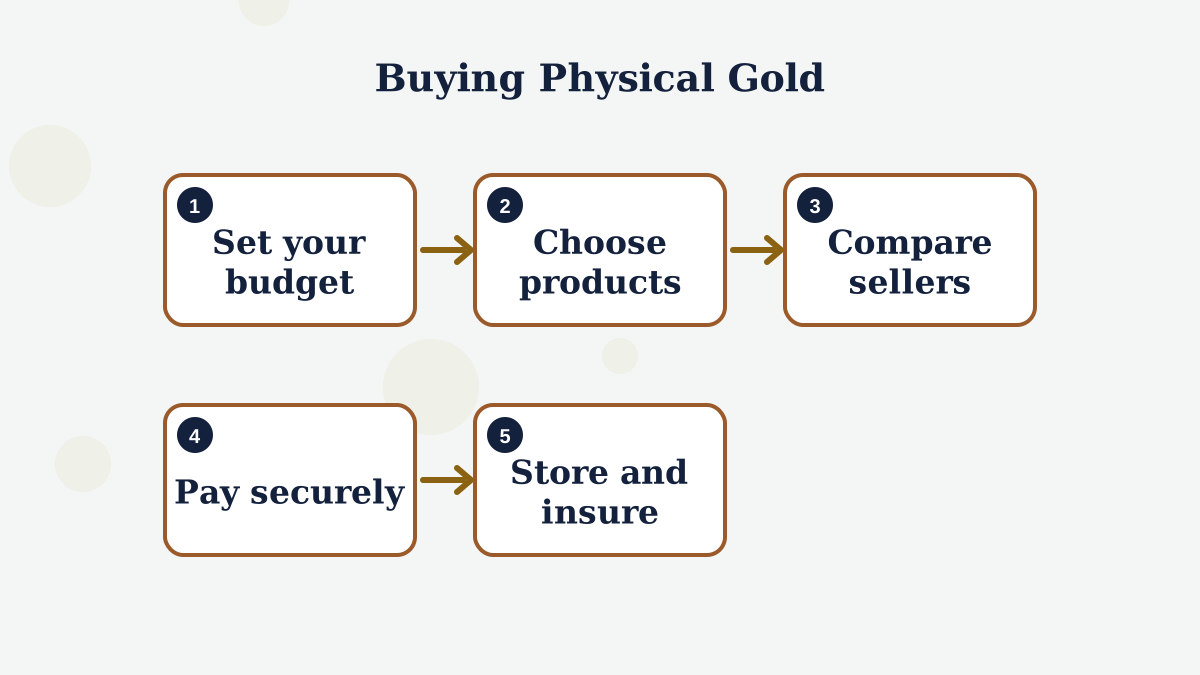
- Set Your Budget and Share
Decide how much of your savings belongs in metal.
- Choose Products
1 oz coins and bars for value; fractional coins for flexibility.
- Compare Sellers
Same product, same day, price over spot and shipping.
- Pay Securely
Wire or check often costs less than cards.
- Plan Storage and Insurance
A safe, a rider on your policy or a vault.
What to Buy
| Product | Why People Buy It | Trade-Off |
|---|---|---|
| 1 oz Gold Eagle | Most recognized in the U.S. | Slightly higher premium |
| 1 oz Maple Leaf or Buffalo | 24-karat, widely traded | Softer metal |
| 1 oz accredited bar | Lower premium | Less recognizable |
| 10 oz or larger bar | Lowest premium per ounce | Harder to sell in part |
| Fractional coins | Small units | Much higher premium |
Avoid collector and "limited edition" coins unless you're an experienced collector. See our numismatic vs. bullion guide.
Where to Buy
Reputable online dealers often have the lowest premiums on common products. Local coin shops let you inspect items and avoid shipping. Gold IRA companies like Noble Gold also sell for cash delivery. Our best place to buy gold guide compares sellers.
What It Really Costs
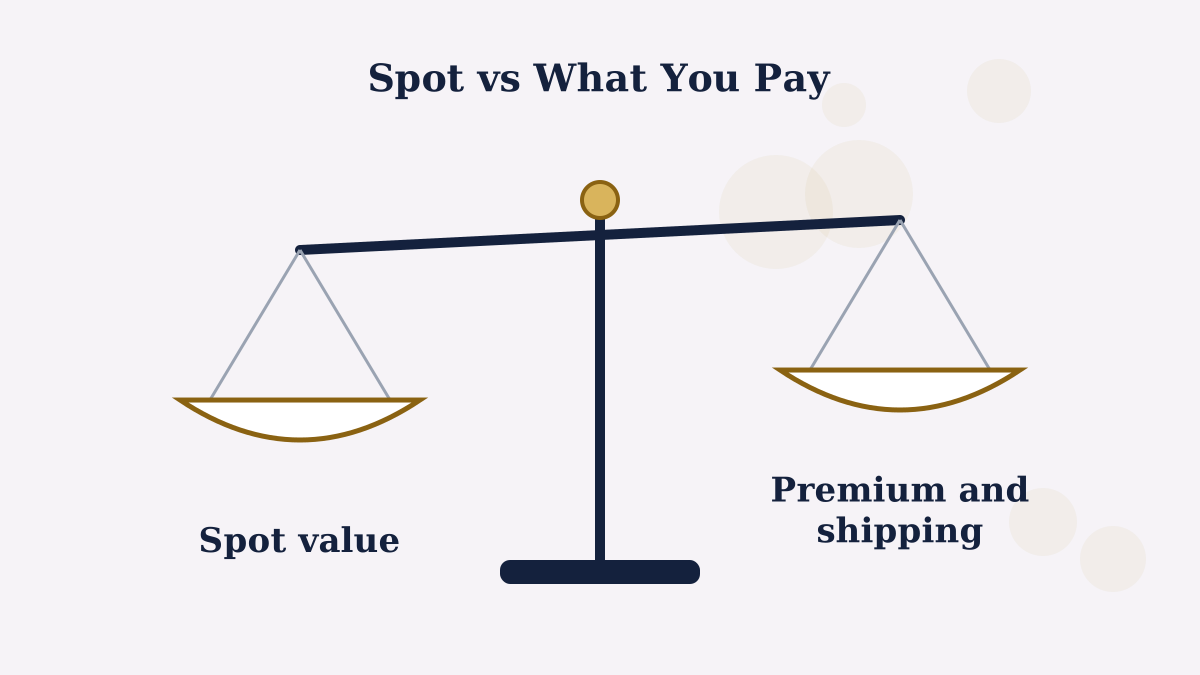
Your total cost is spot value plus premium, plus shipping, insurance and any payment fees. Some states charge sales tax on bullion. Calculate the premium on every quote: price minus spot value, divided by spot value. See our premiums over spot guide.
Storage and Insurance
Many homeowners policies cover only a small amount of precious metals unless you add a rider or specialty policy. Options include a bolted home safe, a bank safe-deposit box or a private vault. See our storing gold at home guide.
Taxes
Gold held more than a year is taxed as a collectible when sold, up to a 28% maximum rate. Keep every receipt for your cost basis. See our physical gold taxes guide.
Physical Gold or a Gold IRA?
If you want gold for retirement savings and value tax-deferred growth, a gold IRA keeps metal in a depository and avoids yearly tax on sales. If you want access and control, physical gold at home makes sense. Many people do both. See our gold IRA vs. physical gold guide.
Common First-Time Mistakes
- Buying from TV or radio ads that push collector coins at high markups.
- Ignoring the premium and comparing only the price per coin.
- Paying by card when a wire or check would cost less.
- Forgetting insurance until after the gold arrives.
- Buying too much at once after a big price move.
An Example
Say you have $12,000 to put into gold and spot is $4,000. You might buy two 1 oz Gold Eagles at about $4,160 each and one 1 oz accredited bar at about $4,080, for roughly $12,400 before shipping. That's three ounces at an average premium of about 3.3%. Figures are illustrations, not quotes.
How to Buy Physical Gold FAQs
What's the best way to buy physical gold?
Buy common bullion, like 1 oz Gold Eagles, Maple Leafs or accredited bars, from a reputable dealer. Compare the price over spot and plan secure storage first.
Should I buy gold coins or bars?
Bars usually cost less per ounce; coins are easier to sell in small amounts. Many buyers hold both.
How much gold should I buy?
Most guidance suggests keeping precious metals to a modest share of total savings, counting gold in IRAs and funds too.
Can I buy physical gold from Noble Gold?
Yes. Noble Gold offers direct cash purchases with home delivery, with a published $10,000 minimum.
The Bottom Line
Buying physical gold is straightforward: choose common bullion, compare premiums, buy from a trusted seller, pay securely and plan storage and taxes. Keep your total gold share modest.