Bullion is priced mainly on its metal content, usually at a few percent over spot. Numismatic coins are priced on rarity, age, condition and history, often at large markups over their metal value. For an IRA, the difference is decisive: most numismatic coins are collectibles and can't be held in an IRA at all.
Regulators have also flagged "semi-numismatic" or "exclusive" coins as a common tool in overpriced sales to retirement savers.
The Key Differences
| Factor | Bullion | Numismatic |
|---|---|---|
| Priced on | Metal content | Rarity, condition, history, demand |
| Typical markup | A few percent over spot | Often far higher |
| IRA eligible | Yes, if it meets the rules | Generally no |
| Ease of valuation | Easy: weight × spot | Hard: depends on grading and collector market |
| Resale | Many buyers, narrow spreads | Fewer buyers, wider spreads |
How Numismatic Pricing Works
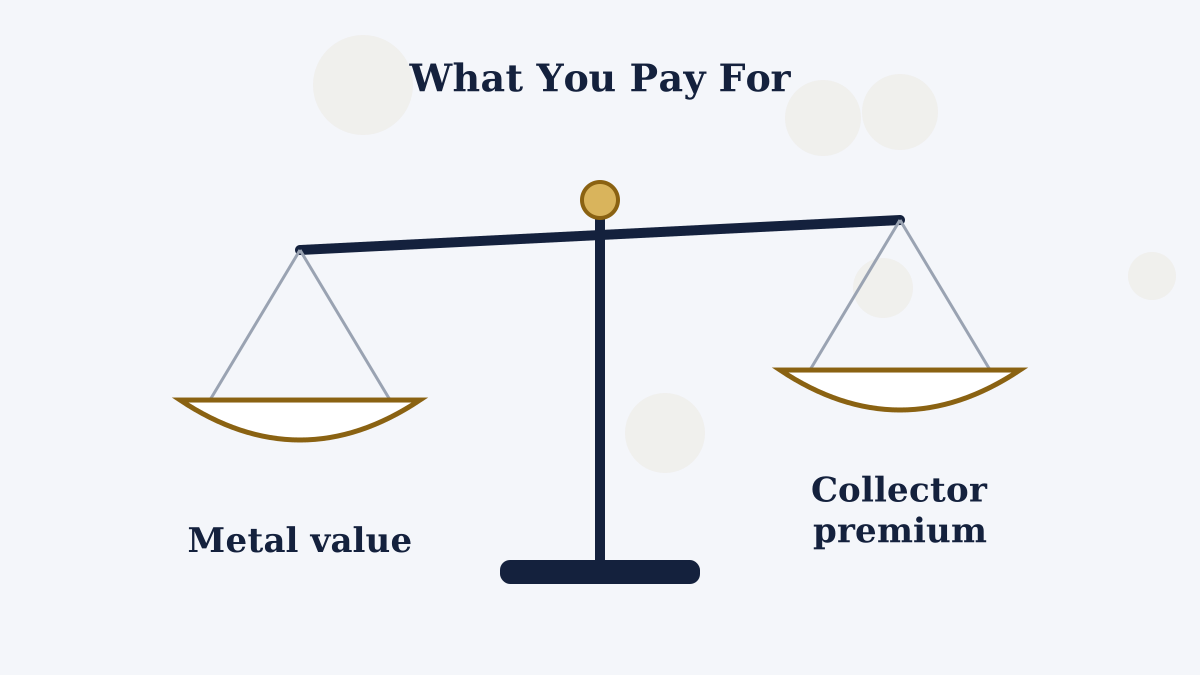
A numismatic coin's price has two parts: the metal inside it and the collector premium on top. The collector premium depends on grading, scarcity and what other collectors will pay. That premium can rise, but it can also shrink or vanish if demand fades or the coin's grade is disputed.
With bullion, almost the entire price is the metal. If gold rises 10%, bullion rises roughly 10%. A collector coin may not.
Why Most Collector Coins Can't Go in an IRA
IRAs generally can't hold collectibles. The tax code makes exceptions for certain named coins, like American Eagles, and for bullion meeting purity rules. Most collector coins, including pre-1933 U.S. gold, don't meet those exceptions. Buying one with IRA money is treated as a distribution, which can mean taxes and penalties.
"Semi-Numismatic" and "Exclusive" Coins

Some sellers market coins as semi-numismatic, limited or exclusive, claiming they combine metal and collector value. Federal regulators have warned that dealers charging extra for these coins is a common sign of a scam. Enforcement cases have cited markups well over 50% on products sold to retirement savers.
If a coin is pitched mainly on its story rather than its gold content, ask for its melt value and the dealer's buyback price before going further.
What About Proof Coins?
Proof coins are specially struck with a mirror finish. Some proofs, like American Gold Eagle proofs, are IRA-eligible because the law names Eagle coins. But proofs carry much higher premiums than bullion versions, so most of that extra cost goes to presentation, not gold. For most IRAs, bullion versions are better value.
When Numismatics Can Make Sense
For experienced collectors who enjoy the hobby, understand grading and buy outside retirement accounts, numismatic coins can be rewarding. The key is knowing what you're paying for and accepting that prices depend on a niche market.
For retirement savings, where the goal is diversification and a clear value, bullion is the better fit.
How to Protect Yourself
- Ask for Melt Value
What is the gold or silver inside worth at today's spot?
- Ask for the Buyback Price
What would the dealer pay you today?
- Compare With Bullion
How much gold could the same money buy as Eagles or bars?
- Confirm IRA Eligibility
With your custodian, before buying.
Numismatic Coins vs Bullion FAQs
What is a numismatic coin?
A coin valued mainly for its rarity, age, condition or history rather than its metal content. Examples include pre-1933 U.S. gold coins and graded collector coins.
Can numismatic coins go in an IRA?
Generally no. IRAs can't hold collectibles, and most numismatic coins are treated as collectibles. Buying one in an IRA is treated as a distribution.
What are semi-numismatic coins?
A sales term for coins marketed as having both metal and collector value. Regulators have warned that these are often sold at high markups.
Are numismatic coins a bad investment?
Not necessarily for knowledgeable collectors. But their prices depend on collector demand, they carry high markups and they're harder to value, which makes them a poor fit for most retirement savers.
The Bottom Line
Bullion is priced on metal; numismatic coins are priced on collector demand, often with big markups. Most collector coins can't go in an IRA, and "semi-numismatic" pitches are a known red flag. For a gold IRA, bullion is the clear choice.