A prohibited transaction is a dealing between your IRA and a disqualified person, usually you or close family, that the tax code forbids. For gold IRAs, common examples are selling your own gold to your IRA, buying IRA gold for yourself or using IRA metal personally.
The penalty is severe: the IRA generally stops being an IRA as of January 1 of that year, and its whole value is treated as distributed.
Who Is a Disqualified Person?
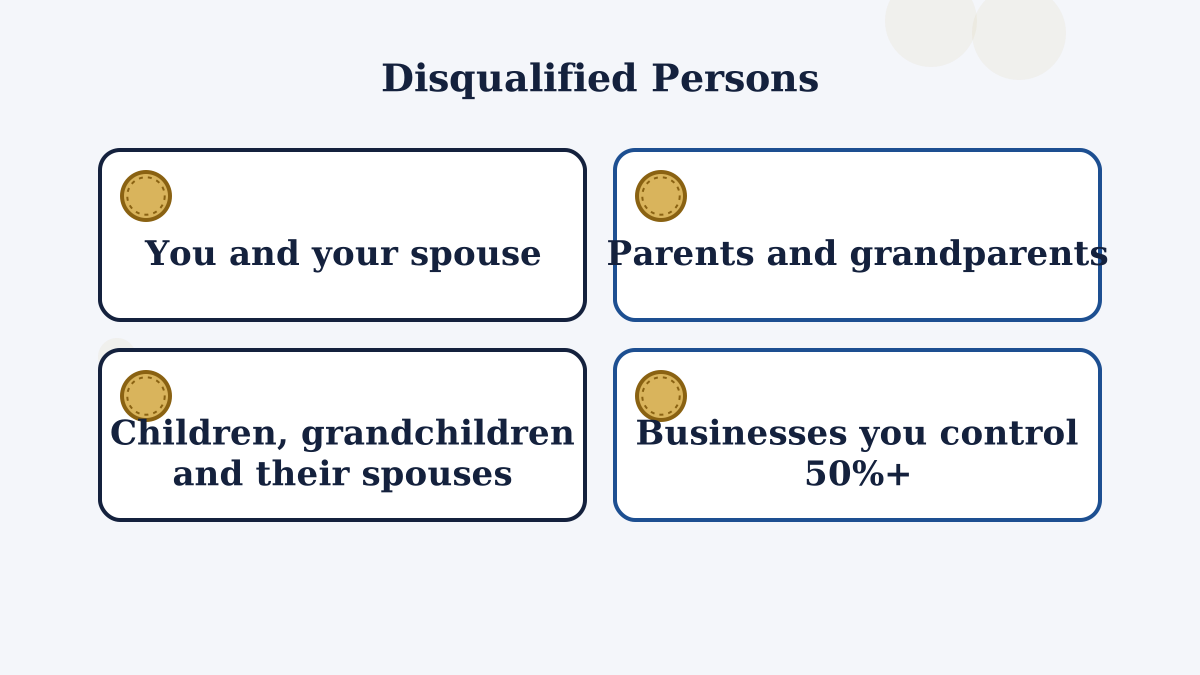
- You, the IRA owner, and your spouse.
- Your lineal ascendants: parents and grandparents.
- Your lineal descendants: children and grandchildren, and their spouses.
- Fiduciaries of the IRA, such as an adviser managing it.
- Businesses, trusts or estates that you or other disqualified persons own or control 50% or more.
Siblings, aunts, uncles and cousins aren't disqualified persons under the core definition, but deals with them can still raise questions. Keep everything arm's length.
Prohibited Transaction Examples
| Action | Why It's Prohibited |
|---|---|
| Selling gold you own to your IRA | Sale between you and the IRA |
| Buying your IRA's gold for yourself or family | Sale between the IRA and a disqualified person |
| Keeping IRA gold at home or wearing it | Personal use of IRA assets |
| Using IRA gold as collateral for a loan | Pledging an IRA asset |
| Paying IRA fees with personal money in some cases | Can be treated as a contribution or problem; ask your custodian |
| Buying metal from a business you control | Dealing with a disqualified person |
What Happens If You Break the Rules
For an IRA owner, a prohibited transaction generally means the account stops being an IRA as of January 1 of the year it happened. The entire balance is treated as distributed at its fair market value, which is taxable income from a traditional IRA, and a 10% penalty may apply if you're under 59½.
That's far worse than a small mistake on one purchase, which is why prevention matters so much.
Related Rules: Collectibles and Storage
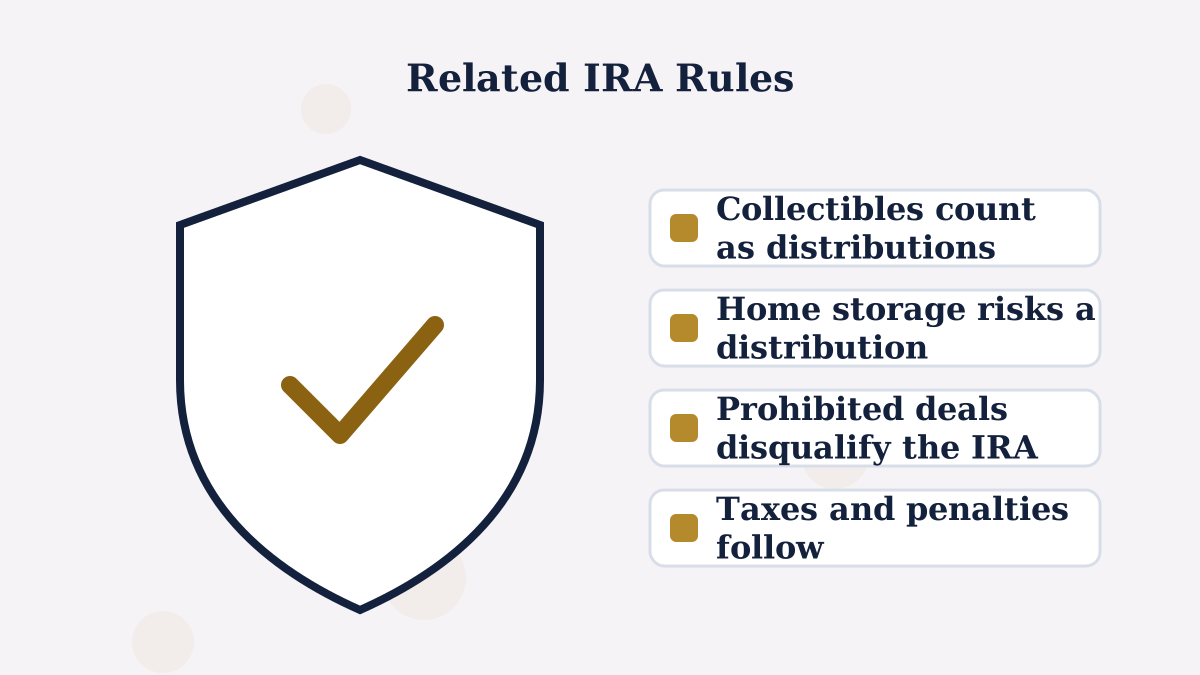
Separate from prohibited transactions, IRAs can't hold most collectibles, and buying one counts as a distribution of its cost. IRA metal also has to be held by a trustee, which is why home storage is so risky. See our home storage guide and IRA-approved gold coins page.
How to Stay Safe
- Buy Only With IRA Cash
Funds go from the custodian to the dealer, never through you.
- Use an Independent Dealer
Not a business you or family control.
- Store at an Approved Depository
Never at home or in your own safe-deposit box.
- Don't Use or Pledge IRA Metal
No personal use, no loans against it.
- Ask Before Anything Unusual
Your custodian can tell you whether a transaction is allowed.
Paying Fees the Right Way
Custodian and storage fees are usually paid from the IRA's cash or billed to you. Policies differ, and in some cases paying with outside money is fine. Ask your custodian how it handles fees, and keep enough cash in the IRA if that's their approach.
If You Think You've Made a Mistake
Talk with a tax professional quickly. The right response depends on what happened and when. Some issues, like a purchase that hasn't settled, can sometimes be unwound; a completed prohibited transaction is harder to fix.
Gold IRA Prohibited Transactions FAQs
What is a prohibited transaction in a gold IRA?
A dealing between the IRA and a disqualified person, such as you or close family, that the tax code forbids. Examples include selling your own gold to your IRA or using IRA metal personally.
Who is a disqualified person?
You, your spouse, your parents and grandparents, your children and grandchildren and their spouses, your fiduciaries, and businesses you or they control by 50% or more.
What happens if I make a prohibited transaction?
The IRA generally stops being an IRA as of January 1 of that year. Its full value is treated as distributed, with income tax and possibly a 10% penalty.
Can I put gold I already own into my IRA?
No. Selling or contributing your own gold to your IRA is a prohibited transaction. IRA metal must be bought with IRA cash from a third party.
The Bottom Line
Prohibited transactions can disqualify an entire IRA. Keep your gold IRA at arm's length from yourself and family: buy only with IRA cash from an independent dealer, store metal at a depository and never use or pledge it.