Gold IRAs follow the same contribution limits as all IRAs. For 2026, you can contribute up to $7,500, or $8,600 if you're 50 or older, across all your traditional and Roth IRAs combined. You need earned income at least equal to what you contribute.
Most gold IRAs aren't funded with contributions, though. Rollovers and transfers from 401(k)s and other IRAs aren't limited, which is how most people move larger amounts into metal.
2026 Limits at a Glance
| Item | 2026 Amount |
|---|---|
| Contribution limit, under 50 | $7,500 |
| Catch-up, 50 and older | $1,100 extra ($8,600 total) |
| Applies to | All traditional and Roth IRAs combined |
| Rollovers and transfers | No limit |
| Earned income required | Yes, at least the amount contributed |
Traditional Gold IRA Deduction Limits
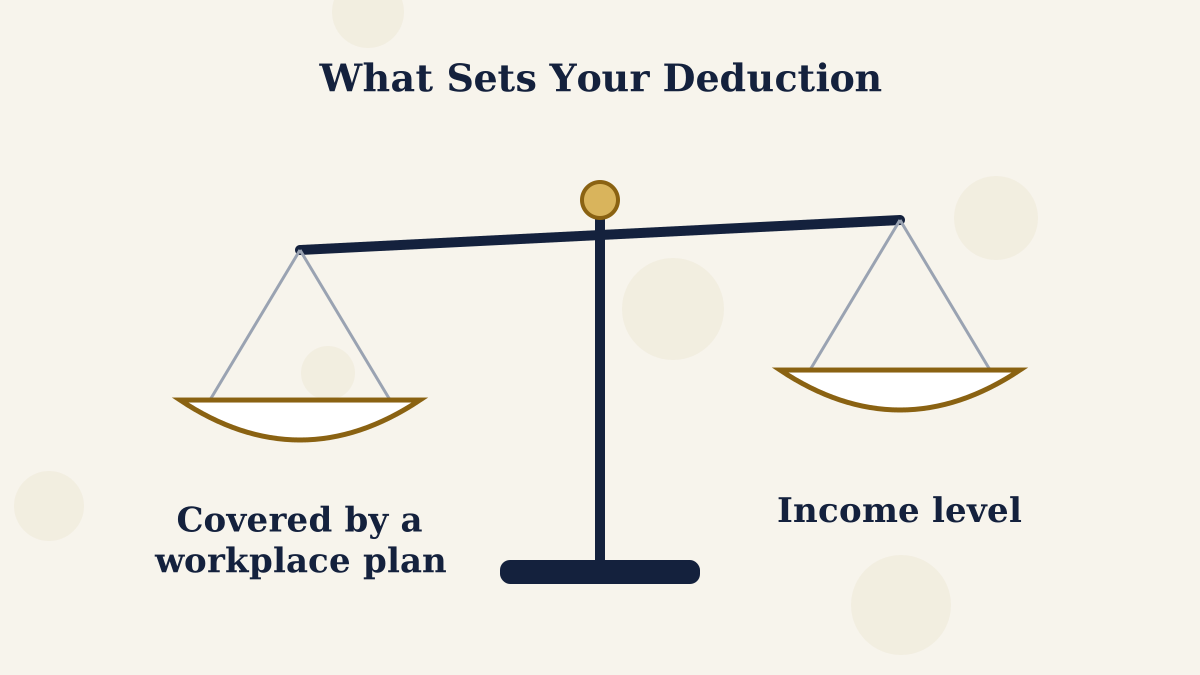
Anyone with earned income can contribute to a traditional IRA. Whether you can deduct it depends on income and whether you or your spouse are covered by a workplace plan.
| Situation | Phase-Out Range (MAGI) |
|---|---|
| Single, covered by a workplace plan | $81,000–$91,000 |
| Married filing jointly, contributor covered | $129,000–$149,000 |
| Not covered, but spouse is covered | $242,000–$252,000 |
| Married filing separately, covered | $0–$10,000 |
| Neither spouse covered | No phase-out |
Roth Gold IRA Income Limits
Direct Roth contributions are limited by income. For 2026, the phase-out is $153,000 to $168,000 for single filers and $242,000 to $252,000 for married couples filing jointly. Rollovers from Roth 401(k)s and transfers between Roth IRAs aren't limited by income. See our Roth gold IRA guide.
Rollovers and Transfers: No Cap
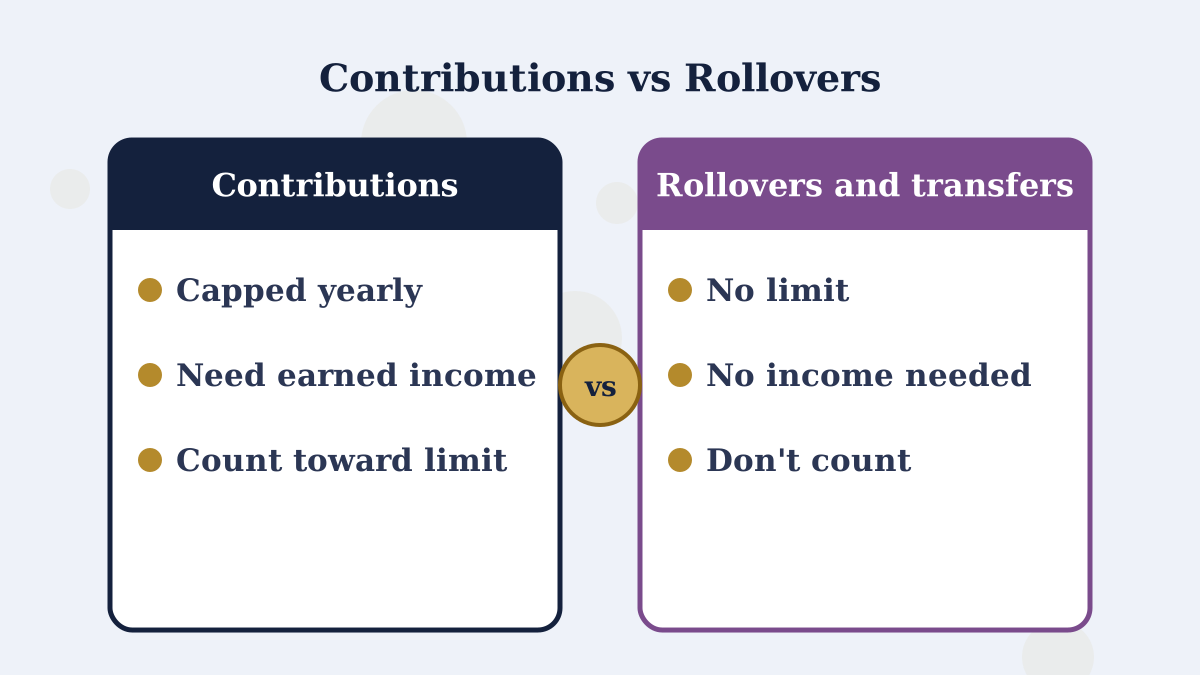
A direct rollover from a 401(k), 403(b) or TSP, or a trustee-to-trustee transfer from another IRA, isn't a contribution. You can move any amount, as often as you like for transfers. That's why most gold IRAs start with a rollover. See our gold IRA rollover guide.
Spousal IRAs
If one spouse has little or no earned income, the working spouse's income can support contributions for both, up to the combined earned income, when filing jointly. Each spouse has their own IRA and limit.
Excess Contributions
If you contribute more than the limit, the excess faces a 6% excise tax for each year it stays in the IRA. You can usually avoid it by withdrawing the excess and any earnings on it before your tax filing deadline. In a gold IRA, that may mean selling a small amount of metal, so it's worth getting contributions right the first time.
Contribution Deadlines
You can make 2026 contributions until the federal tax filing deadline in April 2027, not including extensions. Tell your custodian which year a contribution is for, especially between January and April.
Using Contributions in a Gold IRA
Contributions arrive as cash in your gold IRA. You then choose eligible metal to buy. Because small purchases can carry higher premiums, some savers let contributions build for a year or two before buying. Ask your gold company about minimums for additional purchases.
Contributions After Age 73
There's no age limit on contributing to a traditional or Roth IRA, as long as you have earned income. If you're also taking RMDs, remember that RMDs can't be rolled back into an IRA, so contributions and required withdrawals are tracked separately.
Gold IRA Contribution Limits FAQs
What is the gold IRA contribution limit for 2026?
$7,500, or $8,600 if you're 50 or older. That limit is shared across all your traditional and Roth IRAs.
Do rollovers count toward the contribution limit?
No. Rollovers from workplace plans and transfers between IRAs aren't contributions and aren't limited.
Can I deduct contributions to a traditional gold IRA?
Yes, if you qualify. If you or your spouse are covered by a workplace plan, the deduction phases out at higher incomes. For 2026, single filers covered by a plan phase out between $81,000 and $91,000.
What happens if I contribute too much?
Excess contributions face a 6% excise tax each year they stay in the account. You can usually fix it by withdrawing the excess and any earnings before your tax filing deadline.
When is the deadline for 2026 contributions?
Generally the federal tax filing deadline in April 2027, not counting extensions.
The Bottom Line
Gold IRAs share the same 2026 limits as all IRAs: $7,500, or $8,600 at 50 and older. Deduction and Roth eligibility depend on income. For larger amounts, use a rollover or transfer, which isn't capped.