Segregated storage keeps your metal separate and labeled as yours, so you get back the exact coins and bars you bought. Commingled storage pools your metal with others' of the same type, and you get back equivalent items. Both are held in secure, insured vaults.
Commingled is usually cheaper. Segregated costs more but gives you a clear link to specific pieces, which matters more for some products than others.
The Differences at a Glance
| Feature | Segregated | Commingled |
|---|---|---|
| How it's stored | Separately, labeled for your account | Pooled with same-type metal |
| What you get back | The exact items you bought | Equivalent items of the same type |
| Typical cost | Higher | Lower |
| Ownership record | Specific items and serial numbers where available | Quantity of each product |
| Best for | Specific or unique pieces, delivery plans | Common bullion |
How Segregated Storage Works
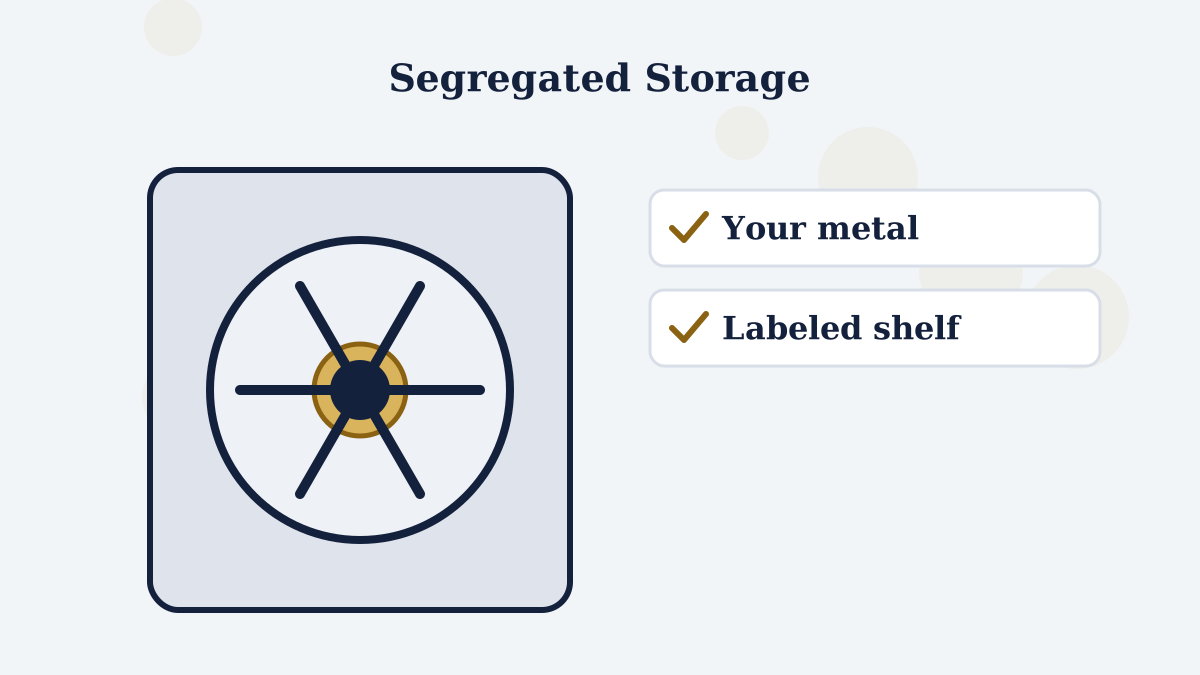
The depository stores your items in a separate, identified space. Bars with serial numbers can be tracked individually. When you sell or take delivery, those same items leave the vault.
That's useful if you care about particular pieces, such as specific bars, or if you want certainty that what you receive is exactly what you bought.
How Commingled Storage Works
With commingled storage, your 20 one-ounce Gold Eagles sit with other customers' Gold Eagles. The depository's records show that your IRA owns 20. When you withdraw, you receive 20 Gold Eagles of equivalent quality, though not necessarily the exact coins.
For standardized bullion, that's usually no practical difference. You still own the metal outright, and it's insured.
Cost Considerations
Segregated storage usually costs more each year because it needs more space and handling. The gap varies by depository and custodian. Some companies charge one flat storage fee and offer segregated storage as standard.
Noble Gold publishes a flat $160 yearly storage fee. Ask any company whether its quoted fee is for segregated or commingled storage, and what the other option would cost.
Which Should You Choose?
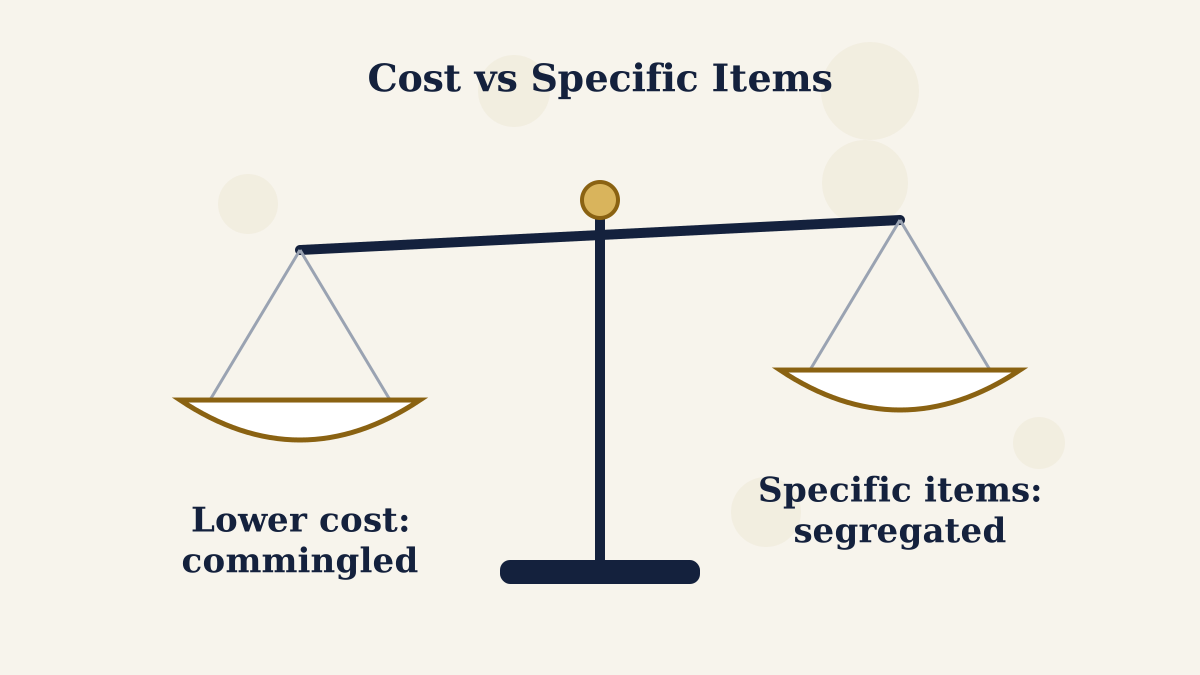
Choose Commingled If
You hold common bullion, want the lowest cost and don't need specific pieces back.
Choose Segregated If
You hold serial-numbered bars or products where specific pieces matter, or you plan to take delivery.
Either Works If
You care mainly about owning a set amount of metal securely.
Questions to Ask
- Is the quoted storage fee for segregated or commingled storage?
- What does the other option cost?
- How is my ownership recorded, and what will my statements show?
- What insurance covers the metal?
- Can I switch storage types later, and is there a fee?
A Word on "Allocated" and "Unallocated"
Some companies use these terms too. In IRA storage, both segregated and commingled metal should be allocated, meaning specific metal is owned by your IRA. Be cautious of any arrangement where you only have a general claim on a pool that isn't fully backed. Ask the depository to confirm.
An Example
Say you buy 10 one-ounce Gold Eagles and a 10-ounce accredited bar with serial number. In commingled storage, the depository records that your IRA owns 10 Gold Eagles and one 10-ounce bar of that brand and fineness. If you take delivery, you'll receive 10 Gold Eagles and an equivalent 10-ounce bar.
In segregated storage, those exact coins and that exact serial-numbered bar sit in a space assigned to your account. If you take delivery, you'll receive precisely those items. For most bullion investors, the commingled outcome is just as good, and it usually costs less.
Does It Affect Selling?
Not much for common bullion. Dealers value Gold Eagles and accredited bars by weight and product, not by which specific coin you hold. Selling from either storage type works the same way through your custodian. The main difference shows up only if you take delivery of specific items.
Segregated vs Commingled Storage FAQs
What is segregated storage?
Your metal is stored separately and labeled as yours. When you sell or take delivery, you get back the exact coins and bars you bought.
What is commingled storage?
Your metal is pooled with other customers' metal of the same type. You own a specific quantity and get back equivalent items, not necessarily the same pieces.
Is commingled storage safe?
Yes, at reputable depositories. Your holdings are recorded and insured. The difference is about which specific pieces you receive, not whether you own the metal.
Which is cheaper?
Commingled storage is usually cheaper. Segregated storage costs more because of the extra handling and space.
The Bottom Line
Segregated storage gives you back your exact pieces for a higher fee. Commingled storage gives you back equivalent pieces for less. For most common bullion, commingled is a sensible choice; for specific or serial-numbered items, segregated may be worth the cost.